
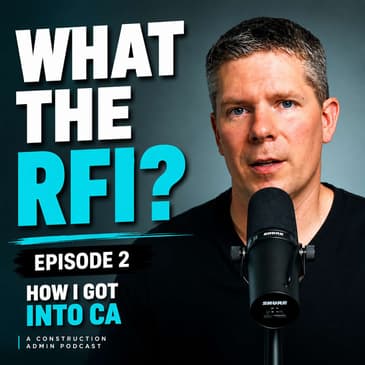
In this episode, Matt Brennan shares his personal journey in the construction industry, from his childhood fascination with construction to his experiences as an architect and project coordinator. He discusses the importance of hands-on experience, the impact of influential mentors, and the challenges and rewards of construction administration. Matt also introduces Part 3, an online construction administration program, and his vision for the podcast to share knowledge, build a network, and improve collaboration between architects and contractors.
Takeaways
- Hands-on experience in construction as a child shaped Matt Brennan's passion for the industry.
- Mentors played a crucial role in his career development and confidence-building.
- Construction administration requires attention to detail, coordination, and the ability to adapt to new technologies.
- Part 3 is an online construction administration program that aims to improve collaboration between architects and contractors.
- The podcast aims to share knowledge, build a network, and foster better collaboration in the construction industry.
Sound Bites
"What was the worst RFRI that you got this last week?"
"Where Did It All Begin? Exploring Matt Brennan's Journey in Construction"
"Pick up some hammers, start building stuff, get your hands dirty."
Chapters
00:00 - Where Did It All Begin? Exploring Matt Brennan's Journey in Construction
06:59 - The Impact of Mentors and Hands-On Experience
16:09 - The Loss of Richard Neger and the Impact on the Architectural Firm
25:54 - Using Technology to Create Powerful Presentations and Videos
32:29 - Introducing Part 3: Disruptive Technology for Construction Administration
36:01 - The Vision for the Podcast: Sharing Knowledge and Building a Network
Got an RFI for Matt? Send it here!
🎙️Website - WhattheRFI.com
🍏Apple Podcast - What the RFI?
🎧Spotify - What the RFI?
🎥YouTube - @WhatTheRFI
What was the worst RFI that you got this last week?(upbeat music) Welcome to What the RFI. I'm Matt Brennan, and this is the podcast that focus on construction administration from the lens and the perspective from an architects and project coordinator's point of view. So today's show is titled,"Where Did It All Begin?" And the agenda is basically, we're gonna talk a little bit about me in a humble way, of course. You're gonna kind of see the experiences I've gone over in these last 21 years. And just why am I even doing this show? Okay, why do I feel the need there is? So let's dive into it and let's go from there. So in the beginning, when I was young, I'm talking like young, I was a little kid in that sense. I loved construction, right? I just did. Originally, I loved trains and I thought it'd be a conductor, but that ship sailed a long time ago. But I love construction. And so many stories came from that. In the days where my dad would take me to the park, I'd be on one of those little diggers. Or I remember there was a time when I was living in my hometown, there was a couple of construction going on and the guys would just leave their equipment. Dad would take me, it would be kind of cool. We'd prop me up and I would just sit there and just have that experience. And I can still smell the diesel films from that day, which is really cool in a sense. But just those memories. So again, thank you, dad, for taking on all these journeys. But there was even a time, a really vivid memory from Expo 86 in Vancouver. Big event, big conference, Princess Diana was there, all people around the world. It was a big, big deal. And in my memory, and we're gonna pretend it's still what it was, if I had to go watch a film and go back to relive it. But I remember sitting on this, one of these massive diggers, something that you saw from the mining site. So again, that's what I have in my picture, in my mind's eye, but it was just incredible. And just what a thrill to be up there. And, you know, where design came into my element, in my world, like I always wanted to build stuff. So I was a Lego maniac at the day. How do I, the whole room filled this stuff, right? It was very spoiled with that. That was the only thing I wanted for Christmas was Lego and just the masterpieces and creating something. And most of all, following the plans. I know I did my own creative pieces too, but I really did enjoy. I was kind of like, you know, the character from the Lego movie where, you know, you got dad wanting, you know, president of business and kind of sticking to the plans. You know, there was a little bit of that too at times, which is kind of funny, but it did break away from it. But even like, you know, I remember, you know, as a kid, my parents would take me to church and that kind of stuff. And I was bored out of my mind, but I was sitting in the pew and I would take those tithing cards, right? And I would basically assemble structures, kind of like a deck of cards in a sense. And it's just so many fun memories with that. And again, kind of going back to, you know, the memories with my father in that sense, we would always be building stuff around. There was always renovations and I'd be involved and helping out. And, you know, again, just kudos to that. So just lots of hands on experience. And I can, you know, again, all these things as a child, these all shape you to what they are today. Yeah. So as I grew up, of course, you know, when I carried on with school and then high school, it was kind of a big deal, right? We didn't had no middle school where I, you know, when I was at my age, we just went from elementary to high school. And in that years, it was grade nine where we could actually select courses. And when doing that, I got put into drama and at first I wasn't really sure about it. And I actually got switched out and I got into my drafting nine, my first drafting class. My mom actually was the one that encouraged me and pushed me to it saying, you should try it out. Give it a shot. And I thought, okay, it's kind of where you're drawing things and making things on paper. And I'm like, okay, sounds good. So went into the class and the first week was a blast. You know, we picked up AutoCAD 14 or whatever the version it was at the time. And it just blew my mind how we, in the first week we just made circles and little cogs and everything using this computer aided drafting software. Kind of a cool thing. And then eventually it went to much deeper to that where we were drawing perspectives and really all the things that kind of growing up the kids were starting to really shine through this and just the passion was very ignited. And then leading through kind of from grade nine to grade 12, that passion just kept continuing and going and going. And I, you know, I was focusing on shop classes. So not only I was drawing, designing but I would take some of my designs and actually taking a shop and make it. One year I made a guitar. It was pretty cool. And just seeing those projects come to life. One of my favorite projects was these candlestick holders that they had something like an 18th century where you could basically put a little ratchet system and have these candles raised to different heights. And it was all made out of a walnut and the finishing. And again, just a real appreciation to those hands on experience. And, you know, I wish, like looking back I do wish that I did some drama. You know, I went back, I think, you know my personality today, I would have been loved it but that's just the way I went. And same thing mechanics will be nice but again, I managed to do that on my own, on my own spare, you know, cars and so on to the future. One thing that was, you know, a big turning point for me was in grade 11, I had enough confidence. We're gonna talk about that in a second how I gained that confidence. That I walked onto one of the construction sites that were in town and I just said, who's the site super? And this is me at grade 11. So again, I'm this bratty little kid. And, but like I said, I had the world in front of me and I wanted to seize it. And so I managed to find a super and name was Sean. And I said, I want to work for you this summer. I just want to come in and give me whatever job. I want to get a tool belt. And I just want to start, you know, hammering some nails and building some houses. Cause they were doing a big subdivision of something like 50 homes. And sure enough, they were awesome, great attitude. And they hired me on the spot and said, great. We'll see you kind of after counter today and we'll get going. And what an experience it was for me, again, I've kind of done this little renovation, but to do it in a proper way. And again, for these guys to trust me. And I did a whole bunch of back framing. I was the back frameer for the company. And through that experience, like I said, it just, it formed my mind's eye from a design. When I drew a wall on paper, I knew exactly what was going on. I knew where the headers were, the king studs, everything about that wall I was drawing, the penetrations for, you know, the plumbing and so on. And I just really enforced it. And it really did give me a leaning edge going forward. So like one little piece of professional advice, you know, and just life lessons. If you're just hearing this, you're in the process of going to school, pick up some hammers, start building stuff, get your hands dirty. And that led to all of their opportunities down the road where while I was waiting to get into, you know, a post-secondary education, I got hired through a couple of millwork companies as well. And that was, you know, it was a great experience. And I think that's what really changed it for me, just giving that leading edge. But I want to kind of take one step back because I got to give kudos to my very first job. You know, I always did a lot of jobs at home. We lived, I grew up on a farm in that sense. So it was horse boarding and paddocks and, you know, it was a job as a family-run business. But my first job was bootlegger, the clothing store, right? And now you got to take a second and look back, take a step back because when I was a kid, you know, I was scared out of my mind to go into, you know, any store. I had to have something behind my mom come where or something like that. It was just who I was. I was a nervous, shy kid. And so when I was 16, I applied and I think in the end, it was like, you know, I think it was 16 and a half or whatever, but basically I started by around 17, doing my first job, which was amazing. And working for this clothing store, it pushed me into a whole new element. It basically, you know, crack open the shell that I was in and built my confidence up. So I immediately, you know, I always had to go and approach people, I had to talk people, I had to engage. And these people skills were learned drastically. So I did all the way that right up to school. And like I said, it's really made who I am today, which is really cool, how I can just run up to someone and say hi. And after a few minutes, you know, I'll meet a friend and after a drink or whatever, we'll be best friends and we'll keep in touch. And that's just who I am. And I just, I owe them so much to that. So like I said, it played a big point in my life and it helped me also basically go into this journey with the whole, you know, the construction company and just walk on site. So big moves with that. And then of course, yeah, I, you know, I finished high school and everything, applied for a number of scholarships and I used all my drafting experience. I was doing renderings back in high school. I was doing 3D, you know, way, way beyond, you know, this was before Revit and everything, it was this architectural desktop. And then before it became, you know, a different name, building suite or what it was called. But it really, like I said, it played some roles in it. So it was time to grow up and basically go to school. So I went to Quanton university, did my degree there. And then immediately that followed into a couple other places, got my first job at integrity design studios. Okay. And yes, this was more of a residential style. They did some commercial as well. And again, it was just a tiny drafting firm really. And that's where I kind of started with it, thinking that was a great thing. It was a lead from school. And, you know, I learned some things, taught some things to my boss with the whole three world. I was using VisRender back in the day and doing renderings. And, you know, it kind of, it worked out and everything, but, you know, there was a place closer to home, which was actually an actual architect, Wayne Biscay architecture out in Maple Ridge there. And worked for Wayne and yeah, it was great. We were doing subdivisions after subdivision, some urban planning and it was good. You know, we were using vector works at the time. And that was another learning curve and other pieces of software to try it out. I was Mac based at the time. I hated Macs and now I love them, but it was good. But during my college days and the university days, I was always networking. And what I mean by networking is I was going to the Augie user groups. I was going to a place at BCIT, one of the local technologists campuses, and they had an AutoCAD user group. And through there, I met a lot of great contacts. To me, I was just fresh, fresh into it. I was green as green, but, you know, all these senior individuals, they took me under their wings, which was awesome. And they, you know, they just educated me. And it was great. Even went to one of their CAD camps and again, learned a ton of things and taught some of them as well. Because again, I was into that, it was a technology. But through that network, and again, at such an early stage of my life, I met some great people. And one of them was a good old friend, Dan McKinnon. And he actually worked for GlobalCAD Systems, which was an Autodesk reseller. So when I got the call, I thought,"Oh, the heck, you know, this is something different." So I had to resign and that was horrible. I felt so bad for resigning at my first real architectural job. But, you know, at the end of the day, it really made sense for myself in going forward. So I met with them and yes, it was hard. And at that point, I was a reseller for Autodesk. And I went to the Autodesk events, which was kind of neat, it was fun, they were big, there was tons of people. And again, that was another network on its own. But what was kind of cool at the same time is I actually opened my own practice called independent drafting and design. And I did a ton of renovations and I did buy the software legally and I was doing that. And there was even a pivotal point where I actually bought a seat of Revit when Autodesk just bought Revit and I picked up one of the earliest seats with it. I wish I still had the copy of the CD because it was a CD back in the day. Heaven help me, I couldn't even put a CD in any of my MacBook these days, it just doesn't even exist. So crazy how the world's changed over the last 20 years. But my job at Global CAD Systems, GSS or whatever, was like I said, I would go from architect firm to architect tech firm, show them a demo of Revit. And within like that 45 minute demo, they would see how, we would do a set of drawings right in front of them. And then by the way, I gotta make a revision, we're gonna pull up these walls and boom, everything was done. And it's so funny because some got it like a light bulb, like, oh my goodness, this is it, we've gotta make a change. And yes, there's an implementation, but we will get there. And then there's some that just went, no, it's changed, it's too much work. And I think the most iconic story for me was so funny was we had a tilt up company, design building company approach us and said, hey, we're really struggling, we're losing a lot of work because we've got this other competitor that's doing a lot of 3D. And we said, well, who's that company? And they said, it was tech construction. And I just laughed because they were one of my first clients that I implemented Revit to. The owner of the company was amazing. He took on the role of basically learning the software from an owner side. He didn't even have any design experience and he excelled in it. So in his time as staff complained, they did it. And basically through that process, we laughed and we showed this company saying, if you wanna compete, this is what you gotta do. But it came down to change and they just had her time with it. But through that global CAD systems, I met a lot of people. Again, I was going from firm to firm and I basically got a pick of the litter in respect to it. And one of those companies that really hit home to me was Reno C. Negron architects or chill interiors. It was the Negron family and that. And the owner of the firm at the time was Richard Negron and just amazing, amazing man. I learned so much from him. My first interview was pretty funny because when we sat down, he's like, I hope you're like, you're hired, you can have the job. I was excited. He's like, but the only condition is that you're gonna see me more than you're gonna see your wife. And if you're okay with that, then come and join us. So point hit home, but it was all good. And through that, that's when my, I would say my architectural career really started to blossom, really start to take off. That's when I started doing CA. And a couple of the key projects that I'm so fortunate to work with Richard and another colleague, a mentor of my old mentor, mine, Ryan DeBeer. We did the Erickson and False Creek there in Vancouver, BC. We did some of the Shangri-La, the Fairmont Pacific. There's a whole bunch of variety of projects that we, through touch points, I was even involved in some multimillion dollar homes on Belmont, one in Southlands. These were incredible homes. Took a lot of time, a lot of effort, but the attention to detail is there. And I think of anything with myself, the attention to detail is something I really take a lot of pride on because of, it's so important. Fast tracking, my own home that I've built up, again, all the details of the moldings and how we're gonna tie in this and tie in this piece of millwork, very important details. And that might even go back to the days of the construction site as well. So it was, yeah, like an incredible career, doing a lot of CA there. I was really happy with it. And then one day I walked into the office and I was a little late. I came back after a meeting and everyone was in the boardroom. I thought, okay, that's odd. And we found that Richard passed and it just, it killed us. It killed me. This kills me just talking about right now, actually going back, you know, and this is a long time. You know, again, this is like 16, 17 years ago. He was an amazing man. And we were a family. We really were like today's world, everyone talks about culture and everything. Well, we define culture back then. And yeah, it was just, you know, we were an amazing group and we lost, you know, the glue, we lost the individual that was holding it together. So, you know, we, we were grieved. We did that. We did all, you know, those things. And we did pick our feet up. And, you know, again, it wasn't just Richard. There was also David and Linda, part of the family. And they didn't want to see us just close up shop. So they made their best effort. And they ended up finding a company called B plus H out of Ontario that wanted to kind of come into the Vancouver network. And so we did a big merge and I tried it for a good year. And you know, there was, with any mergers, there's always bumps and there's growing pains. But again, look at the opportunities that you get to meet more people and connect. And it just wasn't, it wasn't my kind of thing with, you know, from the days of doing all the high rises and everything we were doing one, the time we were actually wrapping up a big high rise at Rogers Arena where the Canucks play. And again, very proud of that. It was one of the last projects kind of taken on from a design and then eventually to a CA. But I was on the train and going back to the global CAD days that I was the reseller, I actually was on the train until I took the West Coast Express into Vancouver. And I saw one of my old colleagues there, or not colleagues, but somebody actually trained, my name is Calvin Benson and Gord Fordorik. And it was so funny because we had a great ride from, they jumped on the mission station and I met them midway, jumped on there. Again, this was all by fluke of all the cars and all the seats, I got to see them. And they had a spare seat. We were talking, kind of explained the whole merger and the challenges and the bumps and the growing pains. And I jokingly said,"Hey, you got a job out in the modular world where you guys are, a way out in the Chilliwack and stuff like that." And they laughed and they said,"We just literally posted one yesterday for an intermediate designer." And I thought, well, I was kind of taking it back. I'm like, I don't know if I want to move out to the Valley from where I was staying. And I thought about it and took a drive. And I realized real quickly, Vancouver prices for homes was ridiculous. Again, this is 15 years ago. So times have really changed. The homes in the Valley were next to nothing. They were anywhere from kind of 250 to $400,000 for home. And I gave up that dream of owning home a long time ago, kind of out of these days and of my career, I just couldn't afford it. This was an opportunity to get into the housing market. And given the circumstance, what made them a little different, this was a modular firm that, I had the opportunity to go to. So you wouldn't just be, you wouldn't be just drawing design plans. You'd be coordinating, but you'd also be doing mechanical, electrical and everything. So needless to say, I did take the job and I'm glad I did. I moved out from kind of the Tri-Cities area, out to Chillac, bought my first house. I was a homeowner, which was amazing in that sense. And my drive, rather than taking the train to Vancouver every day, I just went, I did a quick 10 minute drive and 10, 15 minute drive. And I was at work and it was kind of cool. So at the time, what Britco Modular was, is like I said, they did a lot of camps for the oil and gas fields, right? But these camps weren't just anything like your traditional walks. The clients of theirs, one of these camps would be the best of the best, because they had to track the right workers. And what made it really kind of interesting with that is like these camps, like there was the dorms and everything, but there was also the movie theaters, the full kitchens, the golf centers, entertainment rooms, and it was kind of neat. And you were really constrained with this different design approach with these modular design, because they had to be 14 and a half feet wide max. And then, you know, height was, I think, again, like kind of 14, 13 feet. There was a certain height based on the regulations of transport and the length was, you know, kind of didn't want to really exceed 60 feet. So you had to, you know, when you're designing these, you had to compartmentalize all of these. And we'll get this into, we'll talk about this later in a much deeper episode, but you had to really think through all the bugs. Like when it came to construction administration, you kind of had your stuff in coordinated before, because there wasn't time on the floor to muck around with this. We were using Revit, you were introducing Revit actually at the time. And again, that really helped the cause. And you learned a lot with that. But like I said, where I gained the experience from that realm of it was the construction administration, I'd walk through the factory doors, or beyond the site floor, you know, and I would see all the mods being built. But I learned mechanical systems, all the different types of mechanical systems that we did on it. I learned all about electrical, the loading, circuit breakers, panel schedules, all these things. And of course, structural beams and beam sizes and your snow weights, everything. What great tools to just burn through it. And also specs, specifications. Now they did their specs a little different than master format, but it was still specs in a way of going to the product data and ensuring that this product met code, or this met the new regulations as per the building code, whatever the case was. So a handful of experience, you know, so much experience and just amazing with that. And unfortunately, you know, in 2015, the oil and the gas, it crashed again. It was very similar to the 2007, 2008 crash. And there was some big, big jobs that we were kind of hoping for and they didn't come through. And unfortunately, it just lay offs all around. I never been laid off in all my career of doing this journey. It was always me making the move and putting in the resonations. So this was a different experience. And yeah, it definitely took a little hit. Because again, not only these camps I was doing, but I also was doing a lot of hotels and things that were going ahead. So, you know, it was a hard point for me because I was like, why am I being let go? You know, like, you're building the designs that I've been doing. So I took it as it is. And we'll just call it one of those kind of, you know, double-edged, you know, bittersweet moments. Because in the recent years, again, going through Chilliwack, I would always, I love my classic cars, right? And if you know me personally, like I drive a Mustang and I just, I love it, so much fun. So I always enjoyed the car shows. And one year I was out of cars when I saw this architectural, it was in the old fire hole in Chilliwack. And I thought, okay, I got to take a look at that. So when the whole layoff happened, I actually kind of approached them in that. And ironically, the business that I was telling you about earlier, independent drafting design, I was doing actually some custom homes. And one of them, the home was for a mechanical engineer that worked at Rocky Point Engineering, Richard Cora. And he actually was doing a lot of work with the guys at Craven Houston Powers, CHP. And so, Richard, a huge, you know, huge thanks again for just getting me into the team. And, you know, in front of Ryan Houston, you know, I met with Justin Dick at the time and Alvin Bartel, that were kind of the, you know, the partners or the senior associates of the firm at the time. And they welcomed me with, you know, welcome arms. We were a team at like 11, 12 people at the time. And over the years we grew from that, you know, that small group, very similar to kind of the family vibe that had an RCNA to, you know, 50 person, or the, you know, the last kind of 10 years and it went an incredible journey. And because of all this, you know, again, I was there for just about nine years and the experience alone was incredible. You know, we were doing everything. And what a cool group of people, because at the same time, the boundaries were always encouraged, always welcomed. You had an idea, you could take it to, you know, to staff, it could take it to the partners and they usually were on board, you know, long as the ROI made sense. And some of these really cool things that we did was we, you know, we did drones, right? We were lye-doring sites with this information. We took this 3D data, we put it into our 3D Revit software. The whole office was Revit. There was no AutoCAD, it was amazing. And best yet, we were using a product called Lumion. You know, I always used a product called 3D Studio Max to do my renderings and the videos, but man, it was tough. This Lumion product was incredible. You could draw it with, you know, place the Revit model in there, lay out the trees, lay out the cars, have people moving. And then you became a film producer. And I always did film on the side. You know, I did it when I'm back in the RC&A days, like I took movies or family trips or anything like that. I would do that. And with this technology that we're doing, we would render the site. And rather than just leaving it as just a couple of images, we would make it a whole film thing. And then we would take that into Adobe Premiere. And then I would take music and everything. And eventually we started loading live action to really tell a story with any of the videos that we were trying to present in front of the client, or maybe it was in front of the council. One of the projects I was very blessed with being part of was a new performing arts theater. And again, being a theater, again, rather than just showing the rendering of the fly around the building, we really, we made it something. We had a music plane or these footsteps walking into the area. And the individual, the man that sits down and he starts playing, the music's keyed up to him. And then we start diving into the theater and just a powerful thing. And there was another video where we did a bunch of teaser shots and then boom, right? Really epic music. And one of those videos got showed in front of council. And I was told that, they saw a couple of people with some tears because it meant so much to them. And it was bringing their vision and their own hearts to this. And I think that was really cool with it. But amongst all the cool presentation, that was it. But the reality of these jobs had to be built. And so over the last 12 years, even the days at B plus H, I was heavily involved in schools. And it's actually one of my most favorite and my most passionate designs that I enjoy. I really do enjoy K to 12 design. And I think it's because of the challenge because A, you're giving something back to the community. You're shaping these individuals. I've got kids and I love how seeing their imaginations worked over the years. And what makes it really cool is the 21st learning is incredible, making these case spaces, creating new elements. And I think it's the collaboration what makes me so excited. So like one of the schools I was involved in is up in Kelowna, BC, and it was Canyon Falls and HS Grenda was two of them. And we did this kind of pod-like atmosphere. So what I mean by pods for 21st learning is we kind of had these two classrooms back to back. Well, the center partition would open up. So now this two classrooms become one. Well, we basically mirror that design over. And on top of that, there would be big garage doors that went into the T-bar ceiling, which was its own detail on its own. And you would have this four classrooms that were always isolated before, all lit with glass, opening up into a central area and they could all collaborate and do together. And what a cool way to get the teachers to buy in and work together on these collaborations and different grades too. And having that mix ratio between classes and different styles of teaching and coming together. And I think that was, I'm really excited. And I see where this stays go down the road with 21st learning, because it's all over the States. I'm a group, I'm part of a group called A4LE. And again, it all focuses on school education. So during all this education, of course, all these schools have to be built, massive structures,$30 million projects, 50 million projects, you name it. And the CAA that went into a loan of it was incredible. And again, so blessed, so lucky to be part of this opportunity to run the meetings, do the site meetings. And at times it became tough. It was a point where I was just so inundated with CAA and I couldn't even take on new work, unfortunately. And it was kind of interesting, about almost three years ago, we had a company by the name of Part 3. And it's a CAA software. Basically it stores all your documents in the cloud and it's a central database for all your construction administration. It was actually designed by architects, for architects really. And it was kind of like a pro core opposite. So they approached us and this was a game changer for me in terms of my CAA workflow, because it just took everything and it just automated it. I had the most glorious Excel charts, incredible. They were very pretty. I knew everything was that. But the moment I wanted holidays or if someone helped on the job, things kind of would, you know, it wouldn't be filled in right or whatever the case is. But let alone forget about that aspect. It was just took so much stinking time to put this information together. So it was a tool that really helped me in Excel. And it did, you know, it did change my world. I went from three projects to 15 because of this application. I had my whole design team working on it as well. So this last summer of 2024, an opportunity, or excuse me, 2023, an opportunity came up to work for part three. And I thought, why not? You know, it took me a few minutes to think about it except it was an associate at, you know, this CHP which eventually became a station one architects. And I really had to think about it if I wanted to, you know, make a big career move. Because basically I'm going back to the days of reselling. And I almost say it's really just history's repeating itself. Really that's what it is. I'm going back to those reseller days. You know, I went to that and then I got back into architecture. I just loved it. And when I think what I fell in love with using the software is A, I used it to the full extent. I even had, I was given the opportunity with some of the, with the owners, the co-founders of part three. They wanted me to speak to some of their investors at the time when they were going for a seed campaign. I was happy to do that, to be a reference. And that was the full intention. And I got to see their passion for it too. And over the, again, over the last 15 years of doing CA I was always looking for new ways that we could make things better. How can we do things better in respect to the CA? Because it takes time. There's got to be different ways to improve it. And this software really did change the game. They really took it seriously. Because Autodesk, they weren't looking at it. Hey, they weren't. We were making a product called Autodesk Construction Cloud but the reality is it was geared to defeat the Procore users. And Procore, if you've never heard of it but it's basically, it's a tool that contractors use to manage their subs and get the drawings. And it's a good thing. It does the RFIs, but it's not architects friendly. It inundates you with a whole bunch of useless emails. And this company kind of really saw the gap in the market, the big hole in the market from CA from an architect's point of view and said,"Hey, here's a program that connects with that Procore 2 so you can work with it but just maintains it." So I fell in love with it because I felt it was disruptive technology. And when I do my personal demos today, I compare that part three to the days when I was doing Revit. This is, you know, part three is Revit for CA, that kind of thing, right? And because it's just a new way of doing it which I was very excited. So fast forward to right now, you know, it's been almost a year since I've been with the company. And so what am I doing? So basically I'm on the other side of the fence now. So I'm, you know, acting as the sales side versus, you know, from the architectural point. So what is part three? Part three is an online construction administration program for design for architects, as we've kind of already talked about and I'm not gonna sell it on this podcast. But like I said, I do believe it's a disruptive technology. I am beyond excited to see, I'm more excited to see what we're doing with the AI and so on. So what is life, what has this life taught me in terms of this CA, you know, world? And again, like let's get to the point here, Matt, what's going on? The industry is small, don't burn your bridges, right? It is such a closed network. I'm constantly running into people today that I met years ago. It's just a small industry and I think that's what's really cool about it. The people that you come across, they're all long lasting relationships, you know, and that's what makes it really, really exciting in that sense, okay? I've learned to continue to push the boundaries, not to stop, you know, to keep on going because there's opportunities everywhere you look and having the right people in your life will definitely challenge you there and take you there. You know, keep learning, surround yourself with an incredibly smart people and you don't need to know all the answers, but be open to learning, you know, do that stop, pivot, relearn kind of attitude. So million dollar question, why am I doing a podcast after the age of 40? Like why even bother with this? Well, based on the 21 years, I've got a lot of experience to share and I want to share that with everything, I really do. There's a time, you know, again, I've got a ton of stories when it comes to CA, you know, from good stories, bad stories, you know, Eureka moments on CA with the contractors. And I just want to share that. And again, this is not a podcast that's any means that we're going to, you know, slag contractors. No, I actually want contractors on the show as well. I want, you know, consultants on the show. I want architects on the show. It's, you know, I want to share the experiences and because I think there's again, a need for that. There's definitely a gap and with that. When I started part three, this was something I had in my mind, my vision. And over the last probably six months, it's really kind of grown and matured in the mind. And you know, now it's to the point where I think we're ready to launch this. I know we're ready to launch this. And I want to, you know, bring it out to the world because there's so many opportunities here. And, you know, through this, I want to discuss the techniques, you know, just how can we be better at CA? How can we, you know, run better meetings when we're at the site meeting? Like let's focus to the real point. Like let's focus on the issues and not just the random stuff. How can we be better individuals? And the big thing is how can we be proactive? I don't want to do, again, I don't want finger pointing in that case. I want to be working as a team because there has been some jobs I've worked on, on some projects where the contractor and the design team were working together as a team. And what a difference. We actually finished jobs early. It was great that the contractor would stand up to the meeting and saying, well done. We appreciate how quick everyone's responding to stuff to basically in or share this job and see, you know, months shaved off the project. And this was during COVID times too. So incredible. Okay. As I said, I want to kind of have featured guests on the show. I want to hear their experiences in talking response to CA. So at the end of the day, that's my story. And you made it to the end. Thank you. I really appreciate it. I really do want to build this community based on the experiences that we've talked about. I have a number of, I actually attend a number of conferences and then very, again, that's just the whole networking atmosphere. And you know, I'm actually going to be at a spire in Asheville next month. And then I'll be in Austin, Texas for a big CSI conference. So like I said, always constantly meeting people and I love hearing their stories. I love attending the speaker sessions and hearing the challenges. And again, as a group, I know we can be better. I know we can start, you know, basically tackling projects on a different perspective. And really just working together with contractors in that sense and vice versa. So at the end of the day, the goal is to share this knowledge, build the network, connect, and definitely make some new friends along the way. So that's kind of me. That's this episode of What the RFI. Thank you for joining. I'm Matt Brennan. And then basically till next time, architects just keep on designing and contractors, make those blueprints, those designs into reality. See you on the next one.(upbeat music)