
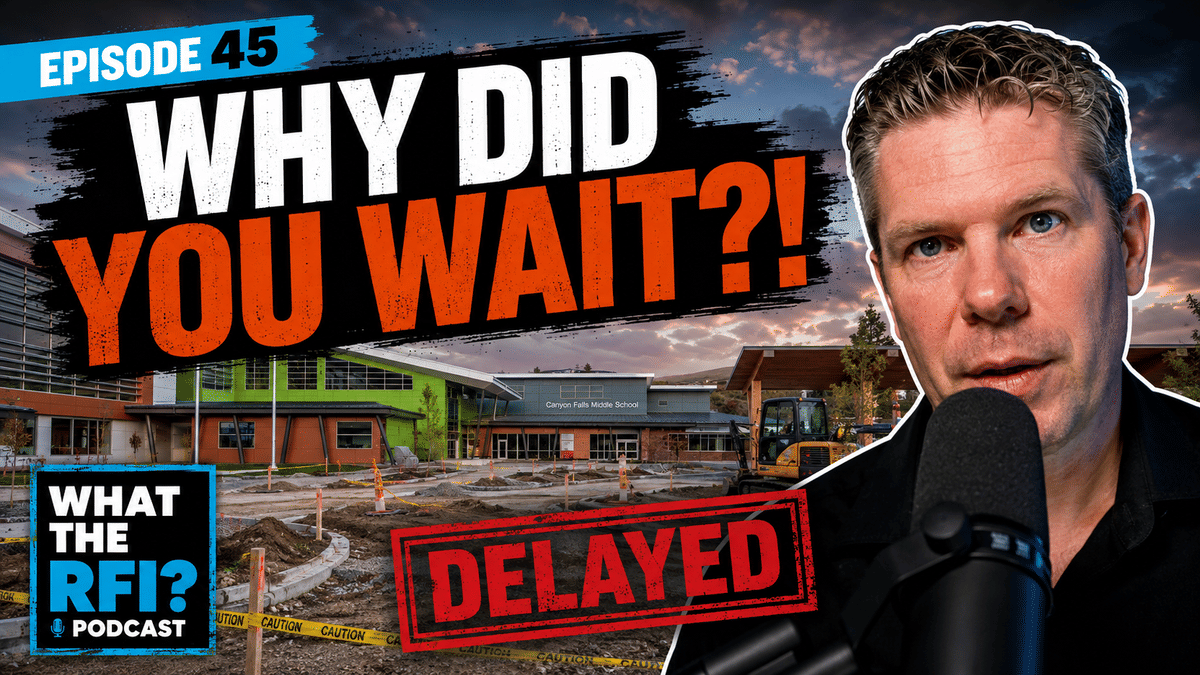
Construction delays don’t usually start with one massive problem. They start with small items that keep getting pushed to tomorrow.
If you want to know how to avoid construction delays, start looking at the final months before occupancy.
You might have 24 months to build a school. Yet somehow, every deficiency, training session, closeout document, hardware adjustment and commissioning issue seems to appear during the final two weeks.
Why?
Most of these items aren’t surprises. We knew about them.
They just didn’t feel urgent yet.
As I said in Episode 45 of What the RFI?:
“Procrastination isn’t free. Somebody always pays—with money, time, or both.”
So, how do we stop the last few weeks of construction from becoming chaos?
It starts much earlier than you might think.
The 90% Complete Trap
A building can look finished while the project is nowhere near complete.
The walls are painted. The flooring is down. The ceiling tiles are installed. From the outside, everything looks ready.
But behind the scenes, there may still be a huge amount of work left.
That can include:
Fire alarm verification
Elevator inspections and certification
Door hardware adjustments
Building controls
Testing and commissioning
Construction deficiencies
Owner and facilities staff training
O&M manuals
Record drawings
Warranty documents
Final inspections
Occupancy requirements
This is what I call the 90% complete trap.
Everyone sees a nearly finished building and assumes the project is almost done.
But that final 10% can contain hundreds of small tasks. Each task may involve a different contractor, consultant or supplier.
The building might be finished. The project isn’t.
How to Avoid Construction Delays During Project Closeout
One of the easiest ways to avoid construction delays is to start closeout before the building is finished.
On my projects, I’m starting that process four months before occupancy.
Not four weeks.
Four months.
At that point, I want the entire team looking ahead.
What needs to happen before occupancy?
What inspections are required?
What documents are outstanding?
Who needs to be booked?
What materials still need to arrive?
Create a formal project closeout checklist. Assign each item to someone. Give it a target date.
Then review the list regularly.
As occupancy gets closer, increase the frequency of those reviews.
The goal is simple:
No surprises.
“Closeout doesn’t start when construction ends. It starts months before occupancy.”
Identify Long-Lead Items Early
Long-lead items can cause major construction delays.
Fire-rated glass is a perfect example.
Doors and specialty door hardware can also take months to arrive.
But don’t only think about materials.
People can be long-lead items too.
You may need to coordinate:
Elevator inspections
Commissioning agents
Controls contractors
Fire alarm verification
Testing agencies
Owner training
Third-party inspections
These people have schedules too.
You can’t call everyone two weeks before occupancy and expect them to be available.
Order early. Schedule early. Follow up early.
Don’t Let Small Problems Become Occupancy Problems
This is where procrastination gets dangerous.
A door hardware issue doesn’t feel urgent six months before occupancy.
Neither does an outstanding control sequence.
The O&M manual can wait.
Owner training can happen later.
Right?
“We’ve still got time.”
And technically, you do.
Until you don’t.
One delayed item starts affecting another.
Testing can’t happen because equipment isn’t ready.
An inspection gets postponed.
A report can’t be issued.
Another consultant can’t finish their work.
Eventually, all those small problems arrive at the same place:
Occupancy.
Suddenly, everything is urgent.
If you want to avoid construction delays, don’t wait for an item to become urgent before dealing with it.
General Contractors Need to Manage Their Subtrades
When a subcontractor falls behind, it’s easy to pass the problem downstream.
“We’re waiting for electrical.”
“The hardware supplier hasn’t delivered.”
“We’re waiting for the elevator contractor.”
Those explanations may be completely legitimate.
But they don’t solve the problem.
The General Contractor is responsible for managing its subcontractors. The GC also has a contract with the Owner.
If a critical subtrade isn’t performing, pick up the phone.
The architect and consultants can help too.
Sometimes a formal notice from the Consultant can help move things forward. It creates a record and gives the General Contractor additional leverage.
But ignoring the problem isn’t a strategy.
Architects and Consultants Procrastinate Too
This isn’t about blaming contractors.
We all procrastinate.
Architects sit on RFIs longer than they should.
Consultants can be slow reviewing shop drawings.
Owners postpone decisions.
Contractors put off deficiencies.
Subcontractors delay ordering materials.
We’re all human.
Things are going to slip through the cracks.
The answer isn’t expecting everyone to be perfect.
The answer is having good processes that catch problems early.
That’s a huge part of good Construction Administration.
The Cost of Construction Delays
Waiting until the last minute has consequences.
Suddenly, there is overtime.
Weekend work.
Expedited shipping.
Extra site supervision.
Premium pricing.
Consultants are rearranging schedules.
Owners are frustrated.
Everyone is stressed.
And then there is another cost:
Trust!!!
An Owner sees a project that had months or years of planning suddenly become chaos.
That doesn’t inspire confidence.
Those relationships can last long after the project is finished.
“Procrastination isn’t free.”
Someone always pays.
Sometimes with money.
Sometimes with time.
Usually with both.
How to Avoid Construction Delays Before Occupancy
So what’s the solution?
It’s not complicated.
Start earlier.
Four months before occupancy, start treating project closeout as part of the active construction schedule.
Create the checklist.
Assign responsibilities.
Track long-lead items.
Schedule commissioning.
Book inspections.
Collect O&M manuals.
Schedule owner training.
Start addressing deficiencies.
Get your consultants involved.
Then follow up.
And follow up again.
Good Construction Administration isn’t about becoming really good at putting out fires.
It’s about preventing as many fires as possible.
The Takeaway
Construction projects are complicated.
Things will go wrong.
Deliveries will be late. People will miss emails. Subcontractors will fall behind. Designs will change.
That’s construction.
But many delays during the final weeks aren’t unexpected.
They are problems we already knew about.
We just waited too long to deal with them.
If we want to avoid construction delays, we need to stop treating occupancy as the date when closeout begins.
Remember:
“Closeout doesn’t start when construction ends. It starts months before occupancy.”
If you’re waiting until the final weeks to start thinking about commissioning, deficiencies, training and closeout…
You’re already behind.
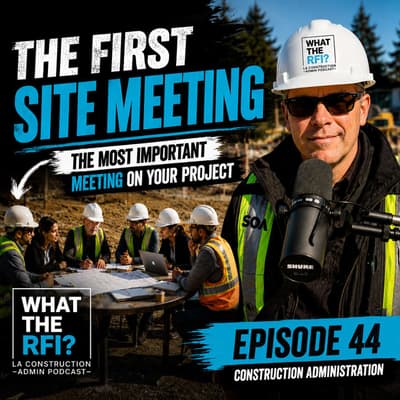
The First Site Meeting: Setting Your Construction Project Up for Success
How do you run the first construction site meeting? In this episode of What the RFI?, Matt Brennan explains how Architects, Contract Administrators, Project Managers, Engineers, Owners, and General Contractors can prepare for and lead a successful First Site Meeting. The kickoff meeting is one of the most important milestones in Construction Administration. It establishes expectations, communication procedures, documentation requirements, project schedules, and responsibilities before constru...
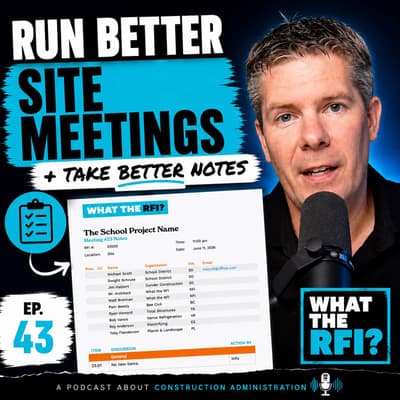
Construction Meeting Notes: How to Run Better Site Meetings
Meeting notes are one of the most important records on a construction project, but what should actually go into them, who should run the meeting, and how detailed do they really need to be? In Episode 43 of What the RFI?, we continue our three-part series on construction meetings with a practical walkthrough of how I prepare for, run, document, and follow up on site meetings as part of the Construction Administration process. We cover construction meeting notes vs. meeting minutes, preparing ...

Granola AI: The Best AI Meeting Note Taker for Construction Administration?
Meeting minutes are one of the most valuable records in Construction Administration, but they can also be one of the most time-consuming tasks. In this episode of What the RFI?, Matt Brennan shares how Granola AI has transformed the way he captures meeting notes, documents decisions, and follows up on action items across multiple construction projects. Unlike traditional AI meeting assistants that rely on intrusive bots joining your calls, Granola works quietly in the background, allowing you...