
Summer is finally here—and with it comes the season of site visits. Whether you’re in the heat of construction or just ramping up your CA work, there’s no better time to sharpen your site meeting skills. In Episode 32 of What the RFI?, we dive deep into how to prepare for, lead, and follow up on construction site meetings like a pro.
Spoiler alert: it’s not just about showing up.
Why Site Meetings Matter More Than Ever
Site meetings are the heartbeat of Construction Administration (CA). They’re where issues get clarified, decisions get made, and momentum gets measured. Miss one? You risk losing critical context. Mismanage one? You risk losing control of the project.
If you’re not running your own meetings, someone else is. And odds are, it’s the GC.
That stops now!!!
Step 1: Prep Like a Pro
Before you even set foot on site, make sure your prep work is dialed in. Here’s what to cover:
Schedule recurring meetings early in the project: lock in monthly dates (e.g., first Monday of every month).
Draft the agenda 1–2 days in advance. Include fresh RFIs, shop drawings, long lead items, and flagged changes.
Coordinate with the owner ahead of time. Ask them what needs to be discussed—no surprises.
Use your CA tools: Whether it’s Excel, Word, or something smarter like Part3, bring your full logs—RFIs, submittals, changes.
And for the love of your own car, rent a vehicle for longer site trips. Save the wear and tear.
Step 2: Show Up Ready
Don’t forget your PPE (hard hat, vest, boots, glasses). No gear = no access.
Sign in at site and complete any orientations.
Arrive early to do a walkthrough, connect with the owner, and set up your tech.
Print agendas or send digitally to attendees beforehand.
Bring updated drawings—not the old ones the GC might still be using from tender.
Step 3: Lead the Meeting
You’re the CA rep. You run the show!
Here’s a proven format:
Start with general items – incidents, high-level updates.
Site items – utilities, long lead issues, critical path dependencies.
Submittals – outstanding shop drawings and deadlines.
RFIs – only open ones, and especially anything critical.
Changes & Pricing – track what’s outstanding, especially anything over 30+ days.
Owner input – always go first.
Discipline updates – architect, mech, elec, structural, landscape.
💡 Pro Tip: Keep people on task. Table tangents. Sidebar later.
Step 4: Keep It Cool
Avoid finger pointing. Stick to the facts.
Bring data (logs, timelines, deadlines). Let the numbers speak.
Push for accountability, not drama.
If things escalate: don’t join the circus. Stay professional and take notes.
And remember—money will come up. Be ready to defend your position calmly, clearly, and with contract references in hand.
Step 5: Wrap It Right
Issue your meeting notes before leaving the site if you can.
Use tools like Part3 to instantly distribute to all attendees.
Do your field review immediately after.
Take photos (for documentation AND social).
Fly the drone if you’ve got one—it’s a great marketing and mapping tool.
Grab lunch or dinner with the client. Relationships matter.
Oh, and bring a change of clothes. You’ll thank me later.
The Bigger Message: Take Back Control
Too many architects are letting site meetings slide into chaos. When you don’t bring the logs, the drawings, or the prep—you give up control. That’s when GCs start steering the conversation and setting the tone.
But when you lead with confidence and clarity?
You own the room! 💪
Final Thought: Are You Running Your Site Meetings?
This episode isn’t just about meetings—it’s about leadership in the field.
So here’s the question: 🤔
Are you actually running your site meetings—or are you letting someone else do it for you?
Let me know in the comments or shoot me a message. And don’t forget:
Architects—keep designing.
Contractors—keep building those blueprints into reality.
And we’ll see you on the next one.
📸 Tag your site visit pics with #WhatTheRFI for a chance to get featured!
Fan Mail: How to Get Into Construction Administration
How do you get into Construction Administration? In this special episode of What the RFI?, recorded while on vacation in Tofino, BC, I answer some fan mail from Richard—an experienced Architectural Technologist looking to make the jump into a full-time Construction Administration role. We talk about how experience in architectural technology, construction documents, RFIs, shop drawings and consultant coordination can become the foundation for a career in CA—and why you probably already know m...
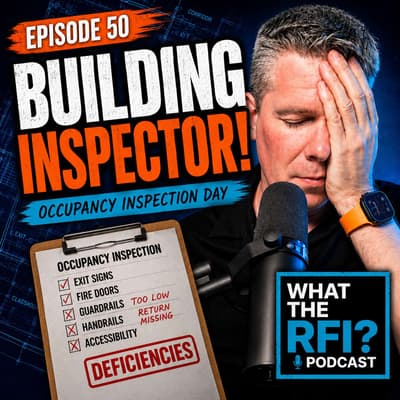
Occupancy Inspections: What Building Inspectors Look For
Your building is nearly finished. The consultants have signed off. Integrated systems testing is complete. Everyone is talking about move-in day. Now the building inspector is coming. In Episode 50 of What the RFI?, we’re talking about one of the biggest milestones in Construction Administration: the occupancy inspection. What happens when the Authority Having Jurisdiction (AHJ) arrives on site? What is the building inspector actually looking for? Who should attend the inspection? And what ha...
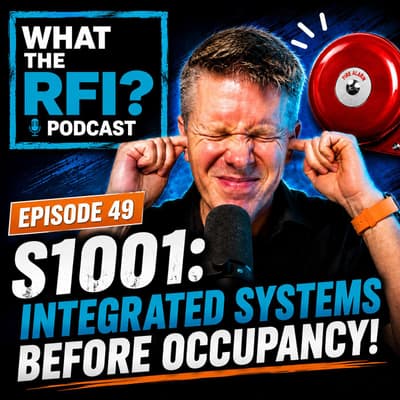
CAN/ULC-S1001 Integrated Systems Testing — Getting Ready for Occupancy
What happens after the fire alarm goes off? Does the elevator recall? Do the doors release? Do the mechanical systems respond? Does the monitoring station receive the signal? In Episode 49 of What the RFI?, we continue our four-part Building Occupancy Series with a practical look at CAN/ULC-S1001 Integrated Systems Testing from the Construction Administrator’s perspective. We break down what S1001 testing is, how it differs from fire alarm verification, who needs to be involved, how to prepar...