

What Is Construction Administration? A Complete Guide for Architects
When architects describe the design process, many people picture concept sketches, polished renderings, and final construction drawings. But the journey from vision to reality doesn’t end when those drawings are issued. What is Construction Administration? It’s the phase where the architect stays involved during construction, helping administer the contract and navigate the questions, changes, reviews, and decisions that come with getting a building built.
Construction Administration (CA) includes responding to RFIs, reviewing submittals and shop drawings, observing work in the field, reviewing changes and payment applications, documenting deficiencies, and helping move the project toward closeout. The exact responsibilities vary depending on the contract, project, and jurisdiction, but the goal is consistent: help carry the requirements of the contract documents and design intent through construction.
Done well, CA protects the client’s investment, supports the architect’s design intent, and helps resolve problems before they become bigger—and usually more expensive—problems.
What Does an Architect Do During Construction Administration?
During Construction Administration, the architect stays engaged as the project moves from drawings into built work. The role typically includes responding to RFIs, reviewing submittals and shop drawings, conducting field observations, reviewing proposed changes and payment applications, documenting deficiencies, and supporting project closeout.
The architect is not the contractor’s construction manager or site supervisor. The architect observes the work and administers the contract within the scope of their professional services, while the contractor remains responsible for construction means, methods, sequencing, coordination, and execution of the work.
The architect’s specific Construction Administration responsibilities depend on the professional services agreement, the construction contract, the project delivery method, and the jurisdiction. That distinction matters: good CA is about administering the contract and protecting the design intent not telling the contractor how to build the building.
The Architect’s Role in Construction Administration
1. Site Visits and Observations
Architects conduct regular site visits to observe the work in progress. These aren’t inspections in the legal sense, but they allow the architect to:
Verify that construction aligns with drawings and specifications.
Identify errors or deviations before they become costly.
Document progress for the client with photos, reports, and notes.
For example: if a contractor substitutes a cheaper material, the architect can flag it early, protecting quality and durability.
2. Reviewing Shop Drawings and Submittals
Before materials are fabricated or installed, contractors submit technical product data, samples, and detailed shop drawings. The architect’s review ensures:
The materials meet design intent.
Systems (mechanical, electrical, structural) are properly coordinated.
The client receives the quality they’re paying for.
This stage is often underestimated, but catching a problem in a submittal can prevent weeks of delay and thousands in rework.
3. Responding to RFIs (Requests for Information)
No set of drawings can anticipate every detail. Contractors inevitably encounter questions—about dimensions, connections, or unclear details. RFIs are the formal channel for these clarifications.
The architect’s timely, well-documented responses keep the project moving forward and minimize costly disputes.
👉 This is where the name What the RFI comes from: RFIs are the heartbeat of the CA process.

4. Managing Change Orders
Construction is rarely static! Changes may arise from:
Client requests.
Unforeseen site conditions.
Design adjustments.
Errors or omissions in the documents.
The architect’s role is to evaluate proposed changes, document them, and confirm costs and schedule impacts are fair and transparent.
5. Reviewing Contractor Payment Applications
Contractors' bill based on progress. Architects review these pay applications to ensure the amount claimed matches the work completed. This protects the client from overpayment or inflated claims.
6. Punch Lists and Project Close-Out
Near project completion, architects conduct a detailed review—creating a punch list of deficiencies that must be corrected before handover. This ensures:
The project is safe, functional, and complete.
The client receives full value for their investment.
Warranty periods and maintenance manuals are properly documented.
Why Construction Administration Matters
Skipping or undervaluing CA puts projects at serious risk. Here’s why CA is essential:
Protects the Client’s Investment: Catching errors early saves time and money.
Upholds Design Integrity: Architects ensure that shortcuts don’t compromise quality.
Manages Risk: Thorough documentation reduces the chance of disputes or litigation.
Builds Collaboration: CA fosters trust between client, architect, and contractor.
Without CA, projects can drift off course—becoming unrecognizable from the original design intent.
Common Misconceptions About CA
“The contractor manages construction—why do we need an architect?”
Contractors execute, but architects safeguard the design intent, contract compliance, and overall quality.
"CA is just paperwork.”
Documentation is critical, but CA is also about presence, judgment, and collaboration.
“It’s optional.”
Standard contracts clearly define CA as a core architectural service. Removing it exposes clients to unnecessary risk.
Construction Administration as a Learning Ground
For emerging professionals, CA is often where the real education of architecture takes place. It’s where theory meets practice—where architects learn negotiation, technical problem-solving, and construction realities.
For firms, strong CA can become a competitive advantage. Clients remember when projects run smoothly, issues are resolved quickly, and the design intent is protected.

Conclusion
Construction Administration isn’t just a “back-end” service; it’s the architect’s opportunity to lead during the most critical phase of a project. Done well, CA ensures the design intent is realized, the client’s investment is protected, and the built environment reflects the best of architectural practice.
At What the RFI, we believe CA is more than risk management. It’s about creating clarity, confidence, and collaboration—giving architects the space to focus on design while ensuring their projects are executed with integrity.
If your firm is looking for Construction Administration support, workflow optimization, or mentorship for younger staff navigating CA, reach out to What the RFI. We help architects reduce overhead, streamline processes, and protect the design intent—so you can get back to what you do best: designing.

Fan Mail: How to Get Into Construction Administration
How do you get into Construction Administration? In this special episode of What the RFI?, recorded while on vacation in Tofino, BC, I answer some fan mail from Richard—an experienced Architectural Technologist looking to make the jump into a full-time Construction Administration role. We talk about how experience in architectural technology, construction documents, RFIs, shop drawings and consultant coordination can become the foundation for a career in CA—and why you probably already know m...
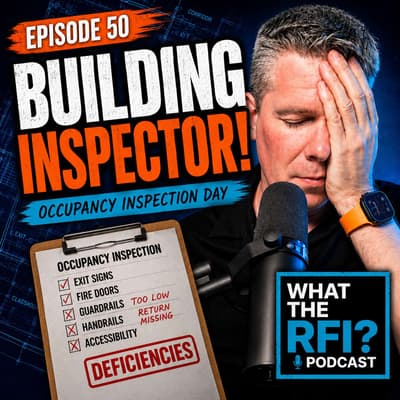
Occupancy Inspections: What Building Inspectors Look For
Your building is nearly finished. The consultants have signed off. Integrated systems testing is complete. Everyone is talking about move-in day. Now the building inspector is coming. In Episode 50 of What the RFI?, we’re talking about one of the biggest milestones in Construction Administration: the occupancy inspection. What happens when the Authority Having Jurisdiction (AHJ) arrives on site? What is the building inspector actually looking for? Who should attend the inspection? And what ha...
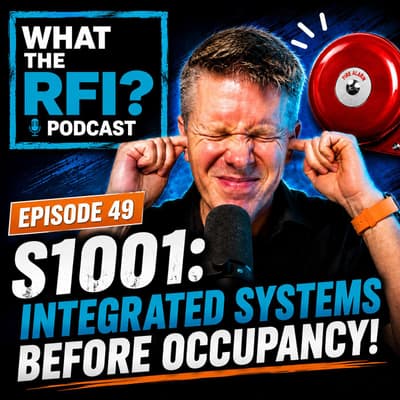
CAN/ULC-S1001 Integrated Systems Testing — Getting Ready for Occupancy
What happens after the fire alarm goes off? Does the elevator recall? Do the doors release? Do the mechanical systems respond? Does the monitoring station receive the signal? In Episode 49 of What the RFI?, we continue our four-part Building Occupancy Series with a practical look at CAN/ULC-S1001 Integrated Systems Testing from the Construction Administrator’s perspective. We break down what S1001 testing is, how it differs from fire alarm verification, who needs to be involved, how to prepar...