

What Is an RFI in Construction? A Complete Guide
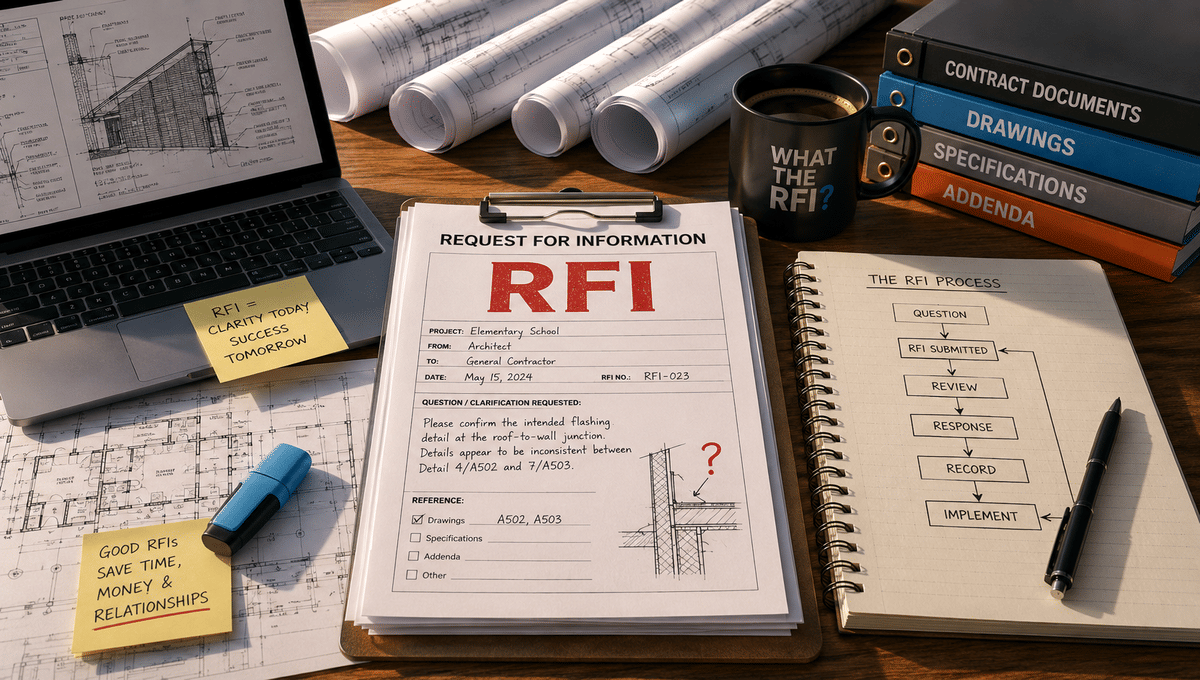
What is an RFI in construction? A Request for Information (RFI) is a formal process used to clarify questions, conflicts, missing information or ambiguities in the construction documents. Contractors typically use RFIs to get the information they need from the architect, engineer or consultant before proceeding with affected work.
A good RFI helps keep construction moving. A bad RFI can create delays, unnecessary design work, added costs and a paper trail nobody wants to untangle six months later. For architects working in Construction Administration, knowing how to review and respond to RFIs clearly—and knowing when an RFI shouldn’t have been an RFI at all—is an essential CA skill.
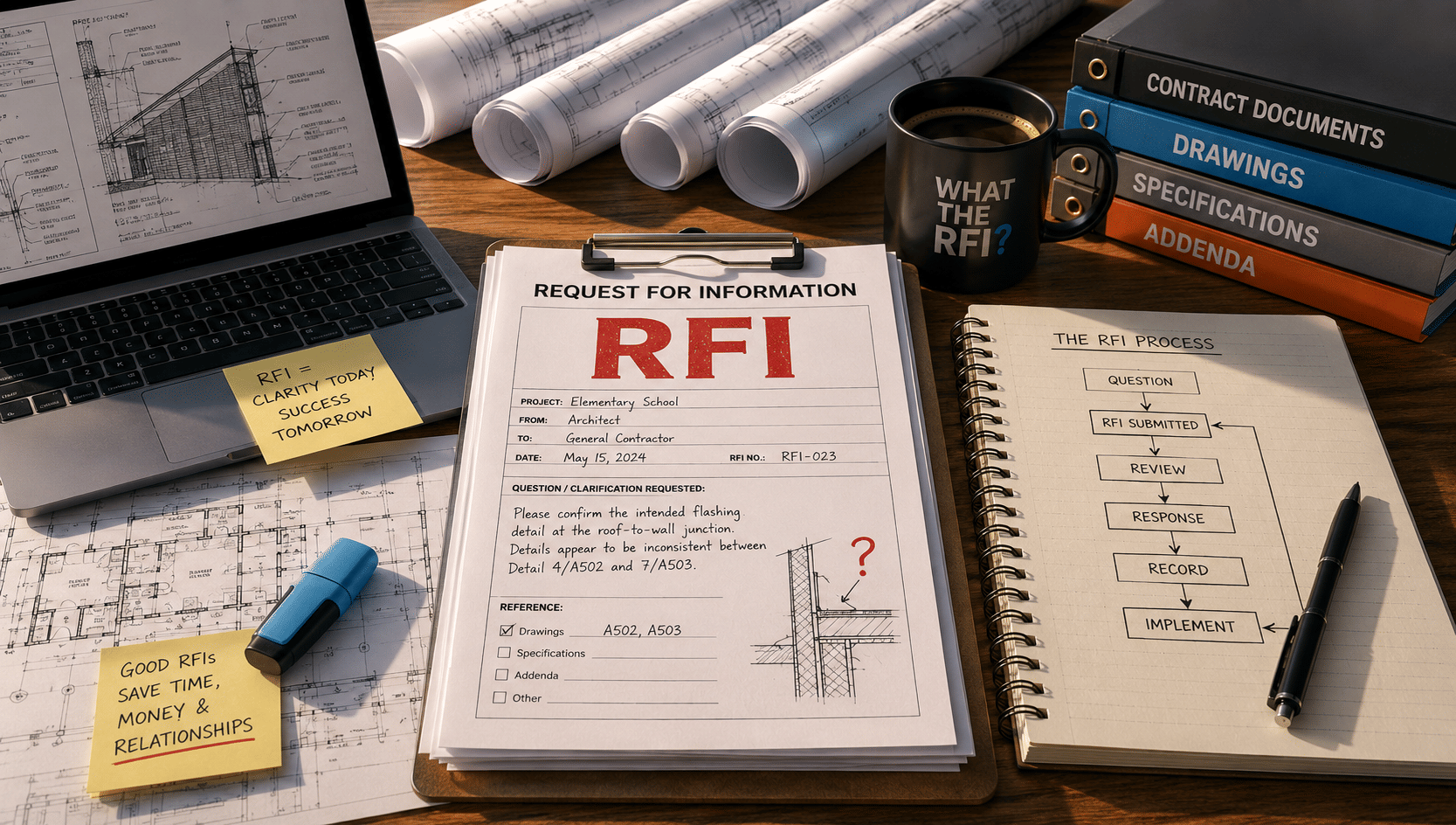
RFIs are commonly used when the contractor identifies unclear, conflicting or incomplete information in the construction documents. The exact RFI process varies by project and contract, but the purpose is generally the same: document the question, obtain clarification from the appropriate consultant and keep the affected work moving
The Role of RFIs for Different Stakeholders
Architects
For architects, RFIs are crucial for maintaining design intent and ensuring that construction aligns with contract documents. Architects must carefully review RFIs from the general contractor to prevent unnecessary design changes and cost overruns while providing clear and timely responses. Proper RFI management ensures that the final build meets the original vision and complies with regulatory standards.
Consultants and Engineers
Engineers and consultants use RFIs to clarify technical specifications, material choices, or structural details that may not be fully defined in the construction documents. For structural, mechanical, electrical, and plumbing engineers, responding to RFIs accurately and promptly can prevent construction delays and costly field modifications.
Owners
Owners rely on RFIs to monitor project progress, costs, and decision-making. Understanding RFIs helps owners assess potential design changes, cost implications, and project risks. A well-managed RFI process allows owners to stay informed and involved in decision-making without unnecessary project slowdowns.
General Contractors and Subcontractors
Contractors and subcontractors submit RFIs when they encounter unclear or conflicting information in the contract documents. Their goal is to resolve issues efficiently to avoid work stoppages, cost increases, and disputes. An effective RFI process ensures smooth construction progress and reduces rework.
The Construction RFI Process
The primary goal of the RFI process is to prevent costly delays and misinterpretations before they impact the project timeline. RFIs are typically submitted in the bidding phase and throughout construction. A standard RFI process includes:
Identification of an Issue – A contractor, subcontractor, or consultant identifies an ambiguity, conflict, or missing information.
Submission of the RFI – The RFI is formally submitted with clear questions and relevant documentation from the general contractor.
Review and Response – The architect, engineer, or consultant (design team) reviews the RFI and provides a response or solution.
Resolution and Documentation – The response is documented and incorporated into the project workflow to guide construction.
Common RFI Categories
- Design Clarifications – Conflicts, incomplete drawings, or ambiguous specifications.
- Requests for Design Changes – Modifications due to constructability issues or sequencing conflicts.
- Material Substitutions – Alternative materials (alternates) proposed for cost savings, availability, or performance improvements.
- Constructability Issues – Concerns about whether the design is feasible in the field.
- Differing Site Conditions – Unforeseen conditions that may impact construction methods or project costs.
Challenges in the RFI Process
The RFI process can be time-consuming and expensive. A global study by Navigant Consulting found that responding to a single RFI costs construction firms an average of $1,080, with cumulative costs reaching hundreds of thousands per project. Additionally, about 25% of RFIs receive no response, which can lead to delays, cost overruns, and legal disputes.
Unnecessary RFIs—those addressing issues already covered in the contract documents or related to means and methods—also slow down the process and increase costs. Managing RFIs efficiently is critical to keeping projects on track.
"Our whole goal in construction is not to lose all the money we made in design"
Best Practices for Managing RFIs
Develop a Clear RFI Procedure – Establish guidelines for submitting, reviewing, and responding to RFIs.
Use a Standardized Format – Ensure each RFI includes a clear question, relevant documents, and proposed solutions.
Prioritize and Categorize RFIs – Identify mission-critical RFIs versus lower-priority questions.
Implement a Centralized RFI System – Use technology to streamline tracking, collaboration, and documentation.
Leverage Visual Documentation – Attach photos, sketches, or drawings to clarify the request.
Final Thoughts
RFIs play a crucial role in construction administration, facilitating clear communication and reducing costly errors. However, an inefficient RFI process can cause delays and financial strain. By adopting best practices and utilizing modern CA software like Part3, construction teams can improve collaboration, reduce turnaround times, and keep projects on schedule.
For architects, consultants, engineers, and owners alike, mastering the RFI process is key to successful project delivery.