So You Want to Work in CA? How to Build a Career in Construction Administration
Construction Administration Career: How to Get Started in CA You can spend years producing construction documents and still have a moment on...


I’m Matt Brennan, a Construction Administration leader with more than 25 years of experience in architecture and construction, including more than 17 years focused specifically on Construction Administration.
Today, I’m a Senior Construction Administrator Leader at Station One Architects, where I work with project teams through the construction phase and help navigate the countless questions, decisions and challenges that come with turning a set of drawings into a finished building.
Construction Administration is where I’ve spent a significant part of my career, and it’s where I feel most at home.
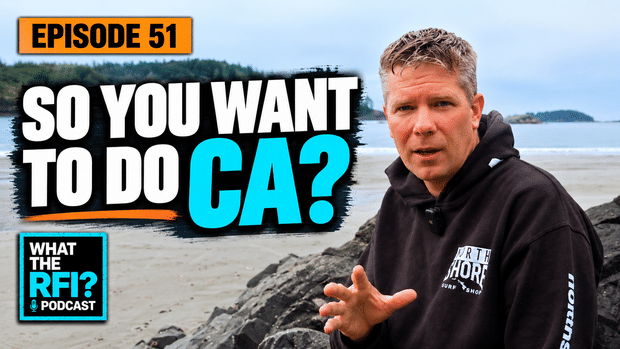
It’s also the reason What the RFI? exists.
My career in architecture has given me the opportunity to work on projects from both sides of the drawing set: helping develop the documents and then working with the project team as those documents become a real building.
Construction has a way of exposing everything.
A detail that looked straightforward on a drawing suddenly has to work in the field. A product that was specified months earlier isn’t available. Existing conditions don’t match the record drawings. Consultants need to coordinate a solution. Contractors need answers. Owners need to understand the cost and schedule implications.
And somewhere in the middle of all of that is Construction Administration.
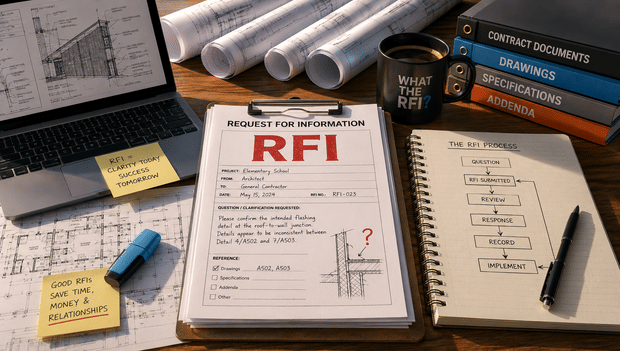
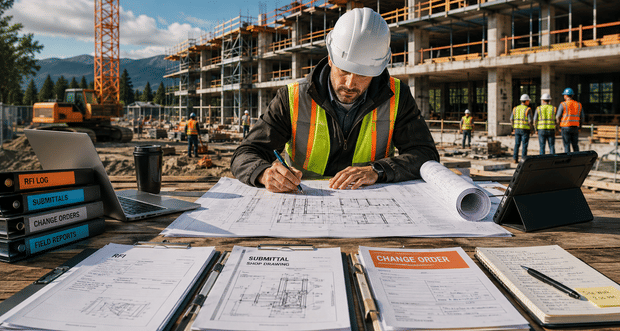
Over the years, my work has involved virtually every part of the CA process, including RFIs, shop drawings and submittals, field and site reviews, supplemental instructions, contemplated and proposed changes, change orders, construction meetings, deficiency reviews, occupancy preparation and project closeout.
But the technical documents are only part of the job.
Good Construction Administration is ultimately about communication, coordination and problem-solving.
You have to understand the drawings and specifications, but you also have to understand people. Architects, engineers, contractors, subcontractors, owners and Authorities Having Jurisdiction can all look at the same problem from completely different perspectives.
A big part of the job is figuring out how to bring those perspectives together and keep the project moving.
After years of working in Construction Administration, I kept coming back to the same realization:
We don’t talk enough about what actually happens during construction.
There is an enormous amount of education available about design, architecture and construction technology. But when a project moves from the drawing set into the field, many people are expected to understand Construction Administration simply by doing it.
What exactly should an RFI contain?
How should an architect review a shop drawing?
When should you issue a Supplemental Instruction instead of a Proposed Change?
What makes a good field review report?
Who is responsible for what during occupancy?
What actually happens when a project reaches substantial completion and closeout?
These sound like simple questions until you’re sitting in the middle of a live construction project and need an answer.
That’s why I created What the RFI?
What started as a podcast has grown into a Construction Administration education and media platform built around practical conversations about how projects actually get constructed.
The podcast gives me an opportunity to sit down with architects, engineers, specification writers, contractors, manufacturers, Construction Administrators and other professionals from across the AEC industry.
Some conversations get technical. Some become lessons in leadership or communication. Occasionally they go completely off the rails.
That’s part of the fun!
More importantly, every conversation is an opportunity to learn from someone else’s experience.
One of the biggest things I’ve learned throughout my career is that nobody knows everything.
Construction is simply too complicated.
The best Construction Administrators I’ve worked with aren’t necessarily the people who always know the answer. They’re the people who know how to find the answer, ask the right questions and bring the right people into the conversation.
That’s the philosophy behind What the RFI? as well.
I’m not interested in pretending there is only one correct way to administer a construction project. Contract language changes. Building codes change. Technology changes. Processes vary between firms, jurisdictions and countries.
There is always something new to learn.
My goal is to take the experience I’ve gained throughout my career, combine it with the knowledge of the people I meet through the podcast and turn it into practical information that other people working in architecture, engineering and construction can actually use.
If something I’ve learned can save another Construction Administrator from making the same mistake, help a young architect understand an unfamiliar process or start a conversation between a consultant and contractor, then What the RFI? is doing what I created it to do.
There is considerably more to life than RFIs and shop drawings.
When I’m away from work and the microphone, I try to spend as much time as possible outdoors.
I love to travel, explore new places and get off the beaten path. My Ford Bronco has become a big part of that. Overlanding gives me an excuse to load up the Bronco, point it toward somewhere interesting and see where the road takes me.
Mountains, back roads, camping, road trips and discovering places I’ve never been are my kind of reset.
I’m always up for an adventure, particularly when it involves getting outside and experiencing somewhere new.
In some ways, that’s probably why Construction Administration suits me so well.
You can prepare as much as you want, but eventually something unexpected is going to happen.
Then you figure it out and keep moving.
After more than 25 years in the industry, I’m still learning.
That’s one of the things I enjoy most about architecture and construction. There will always be another building type, another technical problem, another product, another interpretation and another person who knows something I don’t.
What the RFI? gives me an opportunity to share what I’ve learned while continuing to learn from the people around me.
Whether you’re an architect working through your first RFI, a seasoned Construction Administrator, an engineer, contractor, consultant, owner or simply someone trying to understand how the construction phase actually works, I hope you find something here that makes your next project a little easier.
And if you’ve got a good construction story, an RFI that still haunts you or something you think the industry needs to talk about, I’d love to hear it.
Construction Administration Career: How to Get Started in CA You can spend years producing construction documents and still have a moment on...
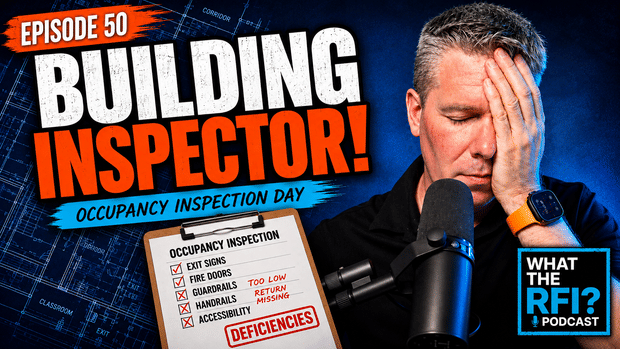
Occupancy Inspection: What Building Inspectors Look for Before You Can Move In Knock, knock. Who’s there? The building inspector. Shit. An o...
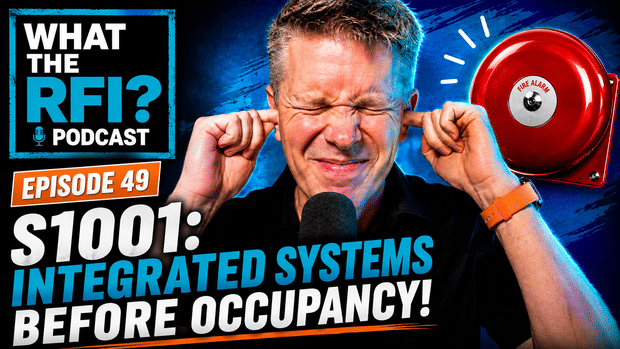
S1001 Integrated Systems Testing Before Occupancy | CAN/ULC-S1001 The fire alarm goes off. Great. It works! But did the doors release? Did t...
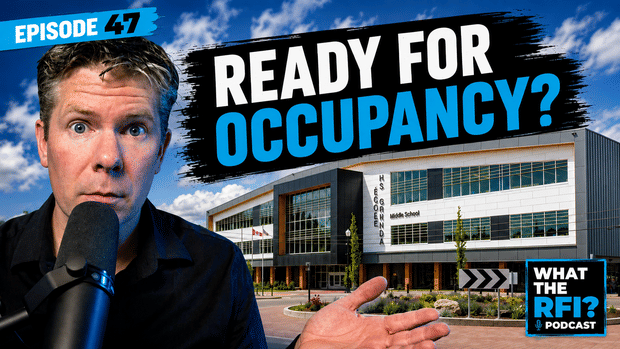
A practical guide to building occupancy preparation for architects, including consultant sign-offs, testing, documentation and occupancy per...
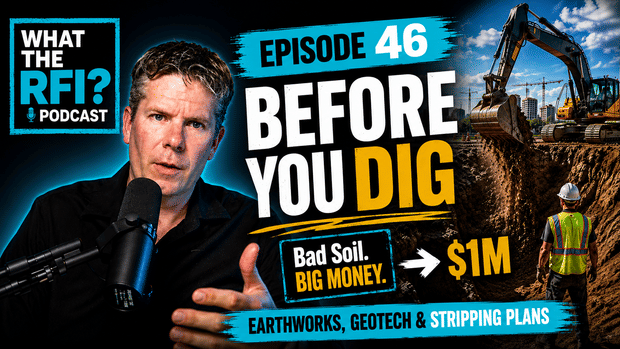
Earthworks construction excavation showing unsuitable soils and geotechnical site investigation
What Is an RFI in Construction? A Complete Guide What is an RFI in construction? A Request for Information (RFI) is a formal process used to...
Construction Administration Terminology: A Guide for Architects Construction Administration has its own language. RFIs, submittals, shop dra...
In "Where It All Began: My Journey in Architecture & Construction Administration," the author reflects on a lifelong passion for architectur...