
How do you get into Construction Administration?
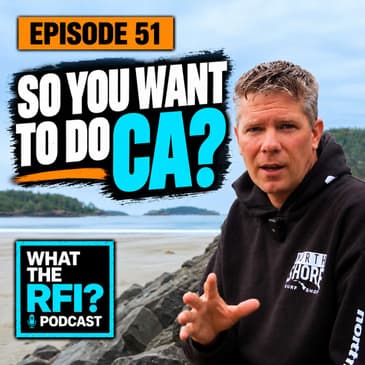
In this special episode of What the RFI?, recorded while on vacation in Tofino, BC, I answer some fan mail from Richard—an experienced Architectural Technologist looking to make the jump into a full-time Construction Administration role.
We talk about how experience in architectural technology, construction documents, RFIs, shop drawings and consultant coordination can become the foundation for a career in CA—and why you probably already know more than you think.
I also get into some of the skills that aren’t necessarily taught in school: learning from experienced Construction Administrators, getting out to site, understanding contracts, communicating with contractors and consultants, and developing the judgment that only comes from experience.
And since I’m recording this episode from the beach while on vacation, there’s one more important CA lesson:
Take your vacation!
Construction Administration can follow you everywhere if you let it. Turn on the Out of Office, hand over your projects, remove the work email from your phone and disconnect.
The RFIs will still be there when you get back.
In this episode:
- How to transition into Construction Administration
- Moving from Architectural Technologist to CA
- Why document-production experience matters
- Getting your first real CA experience
- Learning RFIs, shop drawings and construction changes
- Why field experience is so important
- Finding a Construction Administration mentor
- Learning from contractors and consultants
- Developing confidence and judgment in CA
- What to consider when accepting a CA position
- Creating boundaries between construction projects and your personal life
- Why you need to actually take your vacation
Chapters
- 00:00 — Live From Tofino: We’ve Got Fan Mail
- 01:10 — Richard’s Construction Administration Career Question
- 02:08 — How Do You Get Into Construction Administration?
- 04:58 — Document Support IS CA Experience
- 07:54 — Ask for More CA Experience
- 09:11 — Get Out to the Construction Site
- 11:11 — Learn What the CA Documents Actually Do
- 12:38 — Learn Your Construction Contract
- 13:34 — Learn From the Contractor
- 15:56 — Communication Is a Huge Part of CA
- 18:20 — Find a Construction Administration Mentor
- 19:36 — Richard’s CA Career Opportunity
- 22:19 — Learn to Turn Off Work
- 23:19 — Take Your Damn Vacation!
- 24:54 — Your Project Will Survive Without You
- 25:20 — The RFIs Will Still Be There
- 26:04 — More What the RFI? Fan Mail
- 26:52 — Keep the RFIs Moving… Unless You’re on Vacation
Have a Construction Administration question you’d like answered on a future Fan Mail episode? Send it to What the RFI?
What the RFI? is a podcast about the real-world practice of Construction Administration, including RFIs, shop drawings and submittals, Change Orders, Supplemental Instructions, field reviews, site meetings, construction contracts, occupancy and project closeout.
Got an RFI for Matt? Send it here!
🎙️Website - WhattheRFI.com
🍏Apple Podcast - What the RFI?
🎧Spotify - What the RFI?
🎥YouTube - @WhatTheRFI
Live from the Mackenzie Beach in beautiful Tofino, BC. This is a very special episode of What the RFI. And we got fan mail. Let's get into it.(upbeat music) Welcome to What the RFI. I'm Matt Brennan and this is the podcast all about CA. And as you can see, I'm here in beautiful Tofino, BC. It's my holidays. This is my second time being here at this beautiful beach. It's incredible. And I usually go down to the Oregon coast, but this time we went up to the inland and traveled to the island after checking out Dave Matthews. And we figured we'd take a ferry from Port Angeles, zip up, just to, you know, basically the end of Tofino, BC, where we're staying and we're hanging out in Mackenzie Beach here. It's an incredible place, been surfing. Yeah, we've been doing some sightseeing, went to some natural hot springs, saw some bears, you know, life is beautiful and we'll get into the holiday aspect later and then how to do that right. But as you can see, the show never really stops. It always keeps going. And on that, I actually got some fan mail, which is really cool. So, and Richard, here's what he writes."Thanks Matt."I'm learning a lot going through all your videos."I'm an experienced arts tech with minor actual CA"and mostly document support."I have an opportunity to step in some actual CA role,"but the employment agreement is concerning."Are you going to have a video about relationships"between CA and employer and recudations"for that transition?" Well, first off, Richard, thanks for watching. Really appreciate it. And yeah, I know it's a good question of how do you get in there? Whether you've been, you know, an art tech, you know, a project captain for many years and you haven't really actually gone into the thing, it's a big thing because, you know, this, what the RFI, you know, show goes all about, you know, what's shop drawings are in change orders and field reviews and occupancy, but we haven't actually talked about how to actually get into CA, right? Where do you step? So Richard, let's talk about it. So first of all, there isn't really a straight path into CA, right? Everyone has their own journey. It's all, everyone kind of jumps in differently. It's usually based on opportunities, I find, right? And, you know, like I said, there is no defined path for it. You don't graduate from school and then bam, you're right into the CA. And too, you know, for anyone listening here, you might be an architecture technologist, an intern architect, project coordinator, project manager, you all have different journeys, right? In that respect. And maybe you've been, you spent years preparing all of these construction documents, but you understand what's going on in those drawings in the office, but do you actually know what happens in the field, right? And you know, how do you, you know, it's much different in that aspect. And, you know, Richard, you being an actual architectural technologist is truly a great starting point. And the story, it really is, right? You're not starting over and you've learned the core functionality and we'll base it onto the actual construction values that you've built the foundation, right? And that's what you really have, as long as you know what you're drawing and you understand why you're drawing it, you understand when you're drawing millwork details of how you're doing this type of joinery with that, right? You know, why you're doing certain walls at certain lengths. You've already got that core foundation to take you in to that CA level, right? That next transition, right? And it's, like I said, it's honestly, having that years under your belt is really the best way. And that brings us to the next point is your technical experience matters, right? And, you know, think about everything you've learned as a technologist as of today, right? The drawings, the specs, the detailing, the building systems, building code, right? That's huge. Consultant coordination, wall assemblies, door hardware, list goes on. And that information becomes extremely valuable in CA because now you're gonna see what happens when someone actually tries and builds those details. And I just wanna kind of pause there with that because there was, you know, in my own personal life, I love building things, right? I've got all the tools, the table saws, chop saws, miter saws, you name it, right? Always an excuse to buy a new tool. Come on. But the reality is, is one thing, I actually did a millwork project at home and I drew it and then when I actually started building it, it was kind of shady, right? You know, I was kind of going in there, I'm going, "What the, where's this dimension, right? Where is this stupid draftsman? You know, it's me that drew it." And it was kind of neat just putting that from every all the details I was drawing about this special piece of millwork, the fireplace and how we're returning the crown, et cetera. And then actually looking at the drawings and like taking a step back and building it, it's a different experience, right? And that's where the more experience you get in the office, but also if you can quavil it to the same experience in the field and seeing it being built. And then again, if you get access to that hammer and those projects do it because it's gonna strengthen that ability to do either or, right? So basically, you know, sometimes you can look at perfect on the drawings, but then you get onsite and then you discover, you know, there's a pipe there, right? A scenario, right? The opening is smaller than they expected, right? Everything you perfected in the drawings doesn't always happen, right? And now you gotta constantly pivot with those details, okay? And, or the contractor interpreted the detail a little bit different. And now you're again, back to that pivot thing. So having that flexibility is a big, big key thing, okay? And document support is CA experience. If you have already started working with RFIs and submittals and supplements instructions, if you started already touching that, fantastic. You've already got one foot in the water here, right? You're already almost to the point you're ready to dive in. You've already starting to help your team do it. That's fantastic. So don't discount any of that, the experience that you've already done, right? Like I said, and maybe you haven't touched meeting minutes or field reviews, but that's really the next step. And that's just another layer to it, right? And what deficiencies are and close outs, et cetera. And, but you've been learning information how moves from contractor to the architect, consultants and owners, you understand that process that you're doing and that's great. And that will tie into communication, which we'll talk in about a minute. And basically the next step really in moving forward with this is support the process from owning the parts of the process. Seems complicated, but it's pretty straightforward. And this doesn't always happen overnight, right? I've been doing CA, I don't know, geez, 17 years now, I guess. And again, it always starts small. And that takes into our next kind of point, start small, right? Don't grab on to that$100 million school project. It may be pretty overwhelming. That may be what you get put into because that's the reality of the opportunities that are in front of you, right? But if you've got a small tenant improvement, right? If you've got a simple high rise you've got a team to work with or something like that, that's not a bad approach, right? Start small, work with it. It's okay to have 10 RFIs versus jumping into a school that you're gonna get up to 500. Much different, much more intensive, right? Let alone all the other obligations that you have to do in the field, in the firm as well. Maybe you've got some other projects. Balancing between CA and drawings, that's a topic on its own, but it can be really challenging given the insight that it comes with it, right? But if you're currently working in the office and you wanna get into CA, as simple as it is, tell somebody, right? Just get on there. Like I said, it sounds ridiculous, ridiculously simple, but talk to your project manager, talk to your architect, lead architect, right? Whoever's writing the construction administration say,"I don't want more CA experience." We got intern architects at our office and that's one of the criteria. They need CA experience. So, you know, okay, we'll get them on. They'll shadow us on a couple of projects. They'll take on some RFIs, I'll pass on some RFIs to them, teach it through them, mentor them, right? All this is key, but if you don't see anything, you're not gonna get anywhere with it, right? Pretty straightforward. And ask questions. Can I participate in all the site meeting and the next field review? Can I come to site with you? Can I help with some of the shop drawings? I drew that detail and I know what I'm doing, right? Those little things are gonna just help you with it. Hey, you're gonna make some changes? Let me prepare the supplemental instruction, right? The SI or the PCO or whatever you wanna do, start putting that information together, right? And like I said, you don't need to hand you a $100 million school and then say,"Congratulations, you are the CA." Sometimes that does happen there, Richard, but see what happens, right? It all really happens, okay? And again, I don't recommend taking on a massive project like that, but it may be the only opportunity. So, and I think out of this, get out to site, right? Really straightforward stuff, right? That's, you know, get out of the office. And again, just ask those questions, get out there, see those details and bring your drawings, right? Bring your drawings with you. Walk around the site, look at the drawings, where you are. Hey, what's the details that are going in this room? We haven't, we've got the framing. Hey, there's no wall backup, right? For, you know, the grab bars or something like that, right? Those little details, you know, get out there, start looking at it, ask the questions, right? You know, as you're looking through the drawings in that respect, what's wrong with that? Why does it matter? Now you're gonna understand how the complications tie into it. And this basically bridges the gap between drawings, specs, big key point, and then actually what is constructed there. And that's, you know, that is really cool, right? It's important, it ties into the overall design, right? And more as you do, this is better become, you're gonna be CA and your drawings, because you're gonna be starting to develop that mind's eye with this and really tuning it to what needs to be. And it's incredible, hey? And before you start drawing things differently, once you understand how people build them, that goes back to my millwork example at the beginning of this video, is when I was starting to build this, I was like, man, I'm missing so many dimensions. I can't build off this. So I'd run back to the computer, adding dimensions, reprint that, 11 by 17 at home, and then get back to it and then by the end of it. And I've noticed this too, like for example, like shop drawings with staircases, man, our staff in that respect, they draw the staircases, but they don't have to mention the stuff properly, right? So it's always a challenge when we're actually reviewing those shop drawings, it just never lies into it, right? And that's, it sucks, right? It shouldn't be the case. It should be pretty straightforward stuff, okay? And learn the documentation process, right? And again, it sounds like you've already been in that case and whoever's listening to the show, you probably understand a good set of drawings, you're getting familiar with it. But here's another big one. If you're serious about CA, learn what the documents actually do. And when I say that, it's not just fill them out, but understand between an RFI, the SIs and all that, what a shop drawing is. Again, if these terms are brand new and you're on the, you know, listening to the first time of this episode, you need to check out the CA101, you know, link above, link in the description and everything. There's a whole playlist about it, but definitely CA101. Fantastic video covers all the terminology that we're talking about, but understand the next phase of it. You understand the drawings, you understand the specs, understand the terminology, and then you can start to actually go out to site and actually understand when someone says,"Yeah, we're gonna need an SI for that."We're gonna propose change."What's the proposed change?"What is this involving?" Right? It's that, right? And that's a huge part of CA, and it's not that I need someone thing, I don't need to send something to the contractor, so I'll issue an SI. It's what are you actually communicating? And that's really key, right? With your instructions that you're gonna start to prepare, you need to be very communicative. We just had a discussion before I left on holidays about someone wasn't putting anything in our cover page description, and it's like, by that moment, when I look at that cover page, I should know exactly what we're issuing out to say, right? Does it affect time? Does it affect cost? All these things you should be aware of as you're drafting these things out. So again, get familiar with the documentation side. It really plays a key role into it. And that ties into learning your contracts. This is huge, absolutely. This is huge because nobody really wants to hear, read the contract, I know, exciting stuff. It's pretty bland and boring, but it's actually really important because one thing I like about CA is that, like I said, you become a lawyer. You defend the case, you defend the fact of what is your intent with these drawings and why this shouldn't be an extra insight. These details play a vital role into it, right? And it's just not reviewing if something looks right, it's contractually. And it is a relationship between the owner and the contractor. It depends on the type of contract. But even if it's like a IPD or a CM job, at the end of the day, still you're defending the documents, the drawings, in versus what the contractor is taking it as that interpretation with it, okay? How payments are handled, et cetera. And another good point as we talk about the contractor, learn from the contractor, guys. Learn from the contractor, huge. Listen to them, right? Can't stress that enough. Your relationship, when you go out to site, you'll gain so much more respect if you're having that communication with them, you don't have an us versus GC approach. And again, check out that video above, why it's important, but it's really key to have that relationship with them. And it's really key to listen. They've got years experience. Shut up, swallow your pride, and actually ask them questions. And they've got amounts of experience. And at the same time, you may be able to teach them some stuff. And there was one job where I, we were talking about, hey, what you've been up to, I was actually just building a little shed at my house. And they're like, you're doing that? Of course I'm doing that. And then here, I pulled up my phone, I showed up up, I was framing it and how I was doing this. And I started showing my interior millwork pictures. And the respect you get immediately from that transition is huge. So definitely recommend it, right? But understand, the other one too, is sequencing with these GCs. The more you can understand and help them out, they're gonna appreciate you. We had a case on one of the other projects where they wanted to install the sheet goods. They wanted to install the unit ventilator first, and then the sheet goods around it. And our drawings show that we saw the sheet goods right underneath, and they said, look, can we actually do this first? Install the unit ventilators and then go from there. And in those instances, it's important, to understand what they're asking and going, of course, if I was in your shoes, I would absolutely agree with that approach. So I'm gonna make that. Yes, the contractual documents show that the sheet goods right under the unit ventilators, it's mechanical unit, but yeah, absolutely fair enough. Install the unit ventilator very first, we can cut around it. Those things are never gonna move, and you're never gonna have a discolor of flooring, because it's irrelevant. The more you understand the sequence of how things go together, the better. This type, so with millwork, electrical, you name it, very, very important, okay? And again, there's just a huge opportunity to learn this info. So please ask your contractors in that sense, okay? And learn how to communicate. Man, can't tell you enough. Communication's key, right? And again, swallow your pride, not us versus them. Also in junction to this, there is no emotions to this, right? Just run with it, be clear with it, right? Communicate with it. This ties into the consultants and the contractors and every single thing in that respect, right? Be concise with your communication, be professional. And yeah, it's a powerful tool. It goes without saying, it goes in your own workplace. That's how you answer your emails, that how it answers the in-person meetings, how you react when you get all those curve balls while we're asking for an extra. Be curious, right? Be curious when those extras come in versus you just throwing up your arms and getting into an attitude fight with the contractor. It's not in there and just, you know, it's in the drawings that are done. And not knowing actually what is those drawings. So again, taking you back to know your contract, documents say is huge. But be curious, why are they seeing it? Why are they asking the questions? Why do they feel it's an extra, right? And play that game, right? Work with them, try and understand it. I had a contractor say, what wall tag is this? Or what wall type is this on the drawings? And we didn't tag it, fair enough. We answered it. And then next thing they came back and said, we want an extra because there's a wall. Well, hang on, you already revealed your card and said, you asked, you allowed for a wall, but you just weren't sure what wall is. So just be curious before jumping into it. And then ties into communication, ties into the communication when you're issuing out those SIs, really, really important, right? And sometimes with all this communication, you may need a meeting and that's okay, right? That's how it is. Sometimes it's so much easier to pick up the phone, have that conversation, have that call, and then away you go, okay? And you don't need to know everything. And end of story, right? I don't, I'm always learning, right? I'm always trying to understand. That goes back to being that curious attitude, going out there and asking them about it. You'll never, ever know everything, right? You're always gonna be playing and pushing the details further and further. And you're not a mechanical engineer, you're not an electrical engineer. Why don't you learn it, right? Why don't you learn it, right? Those aspects, those are gonna play a key role, right? The skill isn't knowing every answer, it's not that, but the skill is knowing how to find the answer. Always said, surround yourself with amazing people in your life that you can basically go in and ask them the questions, right? It's always allowing you to do that. And there's nothing wrong saying, I don't know, but let me check into it, okay? And that ties into a mentorship, right? So find a mentor with this and someone that you can look up to, you can ask them hard questions. And at the end of the day, that you can basically learn from, right? It's key for that. I can't stress that enough, right? And you can always just say, hey, I got a situation, what do you think of this, right? There's nothing wrong. Even though I'm doing this for 25, 26 years, I still go up to people and say, yeah, I got a question, right? What do you do? I've had worthy rivals, competitors, right? And colleagues, other architects and from different firms ask me questions at conferences and say, hey, I got a spec question, I got a CA question, what do you think, right? And they've got way more experience, there's nothing wrong. Spend that time and then ask those questions. Absolutely, right? And sometimes those simple conversations turn into some, not only just one learning aspect, but multiple, right? You pick up stuff. So find a mentor, someone you gravitate to, talk to them, work in it and you know, same thing. Drop a line, drop an email on the show, go to the website, www.whattherfi.com, go there, hit my contact form and submit a question. We'll get into it, right? So Richard, going back to the original question that you asked, the employment agreement, right? Hey, I don't know your specific employment agreement, be that, I'm not a lawyer, I don't know it, but I think, you know, there's always opportunity to step into CA, right? And again, going back, asking that question, get in there and yeah, if not, you can always switch firms. There's always CA positions being flowed out there, but definitely grow within your firm, step up the ladder in that respect, show that you've got value to it. It's huge, right? And you know, look at your workload, look at what's the expectation is from your firm. All these questions you definitely have to ask. What authority will you have? Again, where are you gonna go jump in full time and be the CA guy? Are you gonna be kind of helping out someone along the lines? Either way, you guys gotta definitely line your message together and that's key, right? But if there's language in the employment agreement that generally concerns you, yeah, don't ignore it, right? You ask the question, maybe it's time to set up an actual internal review. I've been there for X amount of years and it's time to basically reevaluate it, set up your goals. I've done podcasts about that, about setting your goals for the year. Maybe this is the time to look at where you are, where do you wanna go down the long run and sit down and communicate that. Again, there's that word, communication. Sit down and talk to your employer about that, right? Simple things. That's all I can really say about your agreement. You gotta do it. You gotta have that hard, tough conversation. But those hard, tough conversations are fantastic. They lead to bigger things and better things and you get the idea. So I guess kinda wrapping this up, like why I love CA, right? Do a whole podcast on it. But it's fun. Like I said, you wear multiple hats, you get to not only drop, actually see it come to life and I think that's it. You solve problems. How many times have we dealt with that in so many different occasions where something's not right, something's not working? Then yeah, that's what it is, right? You meet incredibly acknowledged people. I like that dynamics. I love running the site meetings. I love working with individuals. And again, it's not us versus them. It's the more team effort you come into it. It's just a fantastic thing, right? And sometimes because things do go horribly wrong, it happens, right? And I'll tell you, you'll remember that a second kind for longer, right? I made a mistake in some details where parapet was too low. Guess what, I've never drawn a parapet wrong ever again. So those things you're gonna see in Flatline and I hope you'll learn from those mistakes in that. But it's just incredible to see how the wall comes together, connects, where the mechanical units and just seeing what you've drawn in the details and how basically you bring it to light, right? And that's pretty cool. But this brings me to my point here is basically learn to turn it off, right? I'm on vacation right now and it is critical. When it comes to CA in that respect, there's one last piece of the career advice is like, take your vacations, right? You got it, right? We all can get burnt out in that respect. And like I said, learn how to turn it off. And what I mean by that is like can CA and work and everything, but CA specifically can really consume you. There's always another email about an RFI, a submittal, a problems, a request for extra and the contractor needs that answer now, right? Those things are really critical. And if you're not careful, you'll never leave the project. There's always something to do. And it's hard to manage your time because again, you just, you don't know the workloads that come from it, but it takes time, right? So take your damn vacation. And what I mean by that, like I'm on vacation right now and yes, I'm doing a podcast and what the RFI, but hey, I love doing this, I really do. I love giving the education to you guys. But over the years I've learned is basically like take it. That vacation is yours, book it in the calendar and a story. And what I mean by actually take it is don't just put an out of office, that's important for your outlook, but don't spend the time actually looking at your, don't put an out of office and then start looking at your emails because you'll see one email, oh, I'll answer this quickly. And then you'll answer another one. Next thing you know, you're looking at drawings and it's 45 minutes and you've got an angry request for extra and you're fuming and everything. My goodness, this is where I like to basically not just turn off my email, I actually remove it entirely from my phone. Not just my emails, but my calendar invites too because those can even set up triggers where, you know, request for extra meeting or something or one-on-one meeting, oh shoot, what's this? And then your mind starts lying to yourself and those aspects, it's not worth it. So just totally disconnect from it 100%, don't have it, don't have it on your watch, don't have it on your phone, your iPad, get rid of it, okay? As it will take time away from your vacation. And the whole point of this is to relax and enjoy and just enjoy this, right? It's huge, okay? And like I said, just remove it. Cause I know for myself, if I'm gonna look over if there's any temptation, it's there. If it's gone, I can't do it. It's as simple as that, okay? And your projects will survive, okay? End of story. That's a good lesson on by its own. You've got a team behind you. Before you leave, deal with the critical items as much as you can, put a summary list to your team, email it out and tell your consultants, tell the owner, put the office and get the heck out of there. Go on your vacation and enjoy it, right? So simple as that. You need to do it, don't worry about it. They'll be there when you get back, you know, they will survive, the simple thing. The RFI's will still be there and they'll probably have friends too. Just say it. So Richard, thank you so much for being here. I appreciate it. This was awesome. I really enjoy this kind of mentorship on its own. If CAI interests you specifically, absolutely do it, man. Go for it. I encourage you to explore it, get out to site, be part of those projects, start taking ownership of the documents and learn from the contractors. Find that mentor, ask the questions, right? Have the hard conversation with your boss to get in there and start doing CA and you don't need to know everything. None of us did. We all have different paths and we're constantly learning and a story, right? And, you know, yeah, thank you, Richard. But again, in terms of this idea, I actually like this fan mail thing. It's fun. I get a lot of emails from you guys saying, thanks for the show and everything, but give me a question, drop it in there. You like to say, go to the website, shoot me a contact info, send me a question about that. If you've got some CA questions, specific ones, shop drawings, send them through. I love it. RFIs, you know, contracts, the site problems, you know. Basically, if someone's completely bizarre and basically a project you wanted to ask, you know, Matt, what the hell would you do here? Those things are critical, right? Really cool. Send it my way, really appreciate it. And apparently I'll even answer them from the beach. All right, give it to that. Basically, I'm gonna put this away now. I'm gonna enjoy my last few days here. Hit some beaches, some surfing, some campfires on the beach, whatever, you name it, okay? So, but keep the RFIs moving, guys. And unless you're on vacation, architects, keep making, keep designing, and contractors keep making this blueprint's reality. We'll see you on the next one.(upbeat music)