

S1001 Integrated Systems Testing Before Occupancy | CAN/ULC-S1001
The fire alarm goes off.
Great. It works!
But did the doors release? Did the elevator recall? Did the mechanical systems respond? Did the smoke dampers move? Did the monitoring company receive the signal?
Because getting the fire alarm to make a whole bunch of noise is only part of the test.
S1001 integrated systems testing is about proving that the fire protection and life-safety systems throughout a building actually communicate with one another and respond the way they were designed to respond. For architects and Construction Administrators approaching occupancy, it can be one of the most important—and most easily underestimated—tests during the final weeks of construction.
And yes, bring earplugs.
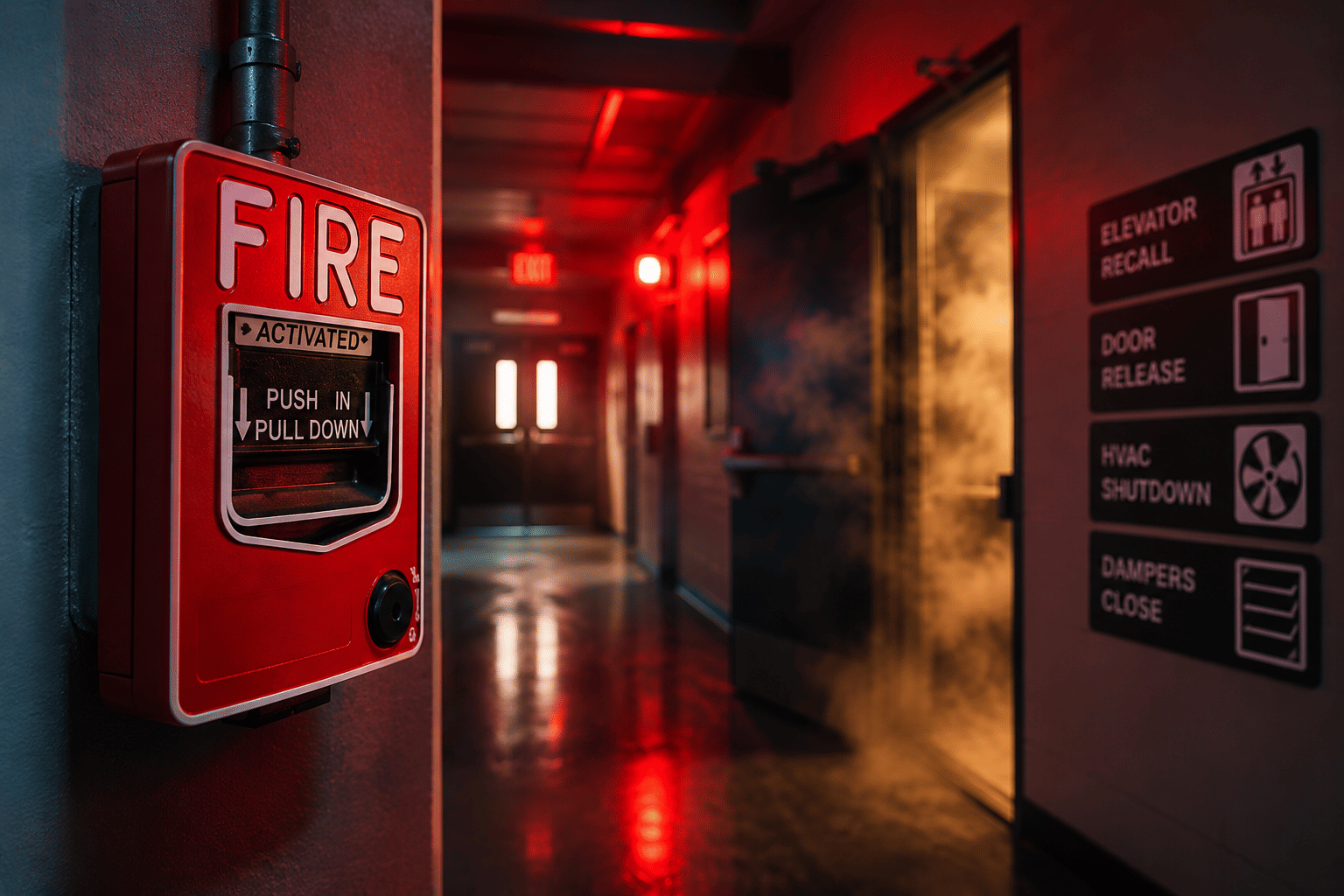
What Is S1001 Integrated Systems Testing?
CAN/ULC-S1001 is the Canadian standard for integrated systems testing of fire protection and life-safety systems. The purpose is to verify and document that the interconnections between those systems operate according to the intended design criteria.
The important word is integrated.
The individual systems may already have been tested. The fire alarm has been verified. The elevator technician has tested the elevator. Mechanical equipment has been commissioned. Access control works.
Wonderful.
Now we need to know what happens when those systems have to work together.
That is what integrated systems testing is trying to prove.
For more information on the standard, see ULC’s information on CAN/ULC-S1001.
For U.S. architects and Construction Administrators, the terminology and applicable requirements are different, but the concept should be familiar. NFPA 4, Standard for Integrated Fire Protection and Life Safety System Testing, addresses integrated testing of fire protection and life-safety systems. Always confirm the applicable codes, standards and AHJ requirements for your project and jurisdiction.
Fire Alarm Verification vs. Integrated Systems Testing
A fire alarm verification and an integrated systems test are not the same thing.
Fire alarm verification deals with the fire alarm system itself. Integrated testing looks at what happens between interconnected systems.
Imagine we activate a pull station.
The alarm sounds. Check.
But now keep going.
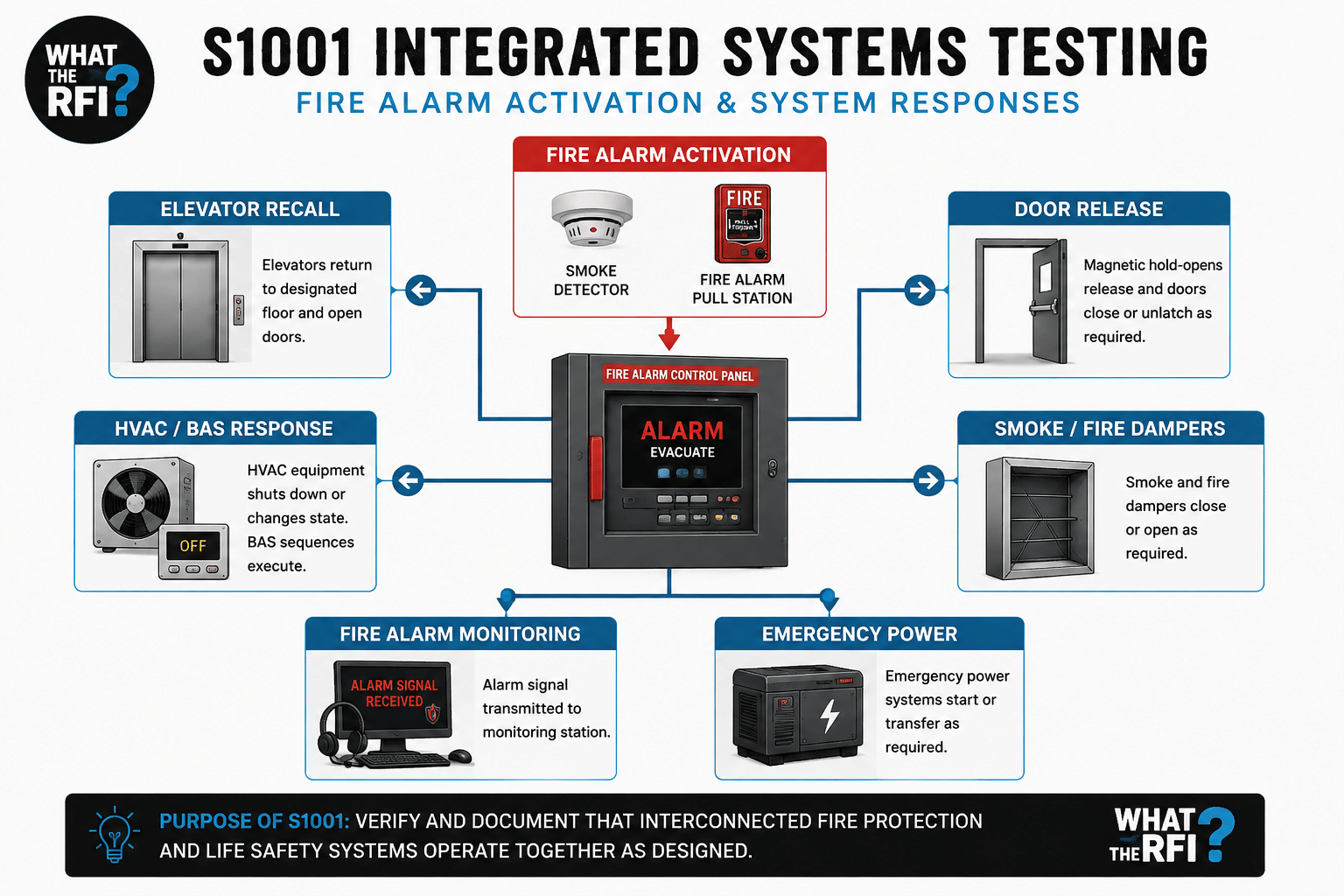
Does the annunciator identify the correct device and location? Do magnetic door hold-opens release? Does access control respond correctly? Does the elevator recall? Do fans, dampers and other mechanical systems respond according to the sequence of operation? Does the monitoring station receive the correct signal?
You can have a functioning fire alarm system and still have a problem during integrated testing because the elevator did not recall.
Or the doors stayed locked.
Or the BAS did not respond.
Every individual system can work perfectly on its own. The question is whether the building works as a system.
What Systems Are Tested During S1001?
The systems involved depend entirely on the building and its design, but a fire alarm event can trigger responses from equipment throughout the project.
Depending on the project, integrated testing may involve the fire alarm and annunciator, elevators, magnetic door hold-opens, access control, HVAC equipment, BAS controls, smoke and fire dampers, fire shutters, sprinkler-related signals, monitoring and emergency power.
One initiating event can create a chain reaction throughout the building.
That is why I think of integrated testing as testing the brains between the systems. We already know the individual pieces exist. Now we want to know whether they are actually talking to each other.
Start Planning S1001 Months Before Occupancy
If you are trying to figure out who is responsible for S1001 testing a week before occupancy, you have a problem.
Start months earlier.
As discussed in my guide to building occupancy preparation for architects, I like to start seriously preparing for occupancy approximately four months before the target date. S1001 needs to be part of that conversation.
You can also watch Episode 47: Construction Occupancy — How to Prepare for the Final Inspection for the broader occupancy-preparation process.
One of the first questions should be:
Who is retaining the integrated testing coordinator?
Do not assume.
Review the specifications and contract documents. Depending on the project, the testing coordinator may be retained by the owner, contractor or another party identified by the project requirements.
If it is an owner responsibility, the architect or Construction Administrator may find themselves helping the owner get the process moving. If it is included in the contractor’s scope, confirm that someone has actually been retained and that planning has started.
“Somebody else must be dealing with it” is not an occupancy strategy.
Who Needs to Attend S1001 Testing?
Integrated testing can require a surprisingly large group because the person coordinating the test cannot repair every system that might fail.
Depending on the project, participants may include the integrated testing coordinator, architect or coordinating registered professional, General Contractor, electrical contractor, fire alarm technician, mechanical contractor, sprinkler contractor, BAS/controls technician, elevator technician, mechanical engineer and electrical engineer. Access control, door hardware, generator or other specialists may also be needed.
I also recommend communicating with the Authority Having Jurisdiction ahead of time. The building or fire department may want to observe some portion of the testing—or they may have no interest in attending.
Ask.
More importantly, identify the people who actually need to operate and troubleshoot the systems. Talk about it during your occupancy meetings and confirm attendance well before testing day.
Having ten people standing around waiting for the eleventh person is an expensive way to spend a morning.
S1001 Testing Day Should Not Be Commissioning Day
This is one of the biggest CA lessons in the entire process:
S1001 testing should not be the first time the project team discovers whether the systems work.
Before formal integrated testing begins, the individual systems should already have been tested, commissioned or verified as applicable. Fire alarm verification should be complete. Elevators should be operational. BAS and controls should be functioning. Monitoring should be established. Access control should be ready. The trades should understand the required sequences.
Ideally, the contractors have already walked through those sequences themselves.
If you already know the elevator will not recall, why are you paying the integrated testing coordinator, consultants, technicians and trades to stand there and watch it fail?
Fix it first.
Otherwise, you are paying for a very expensive deficiency review followed by a very expensive retest.
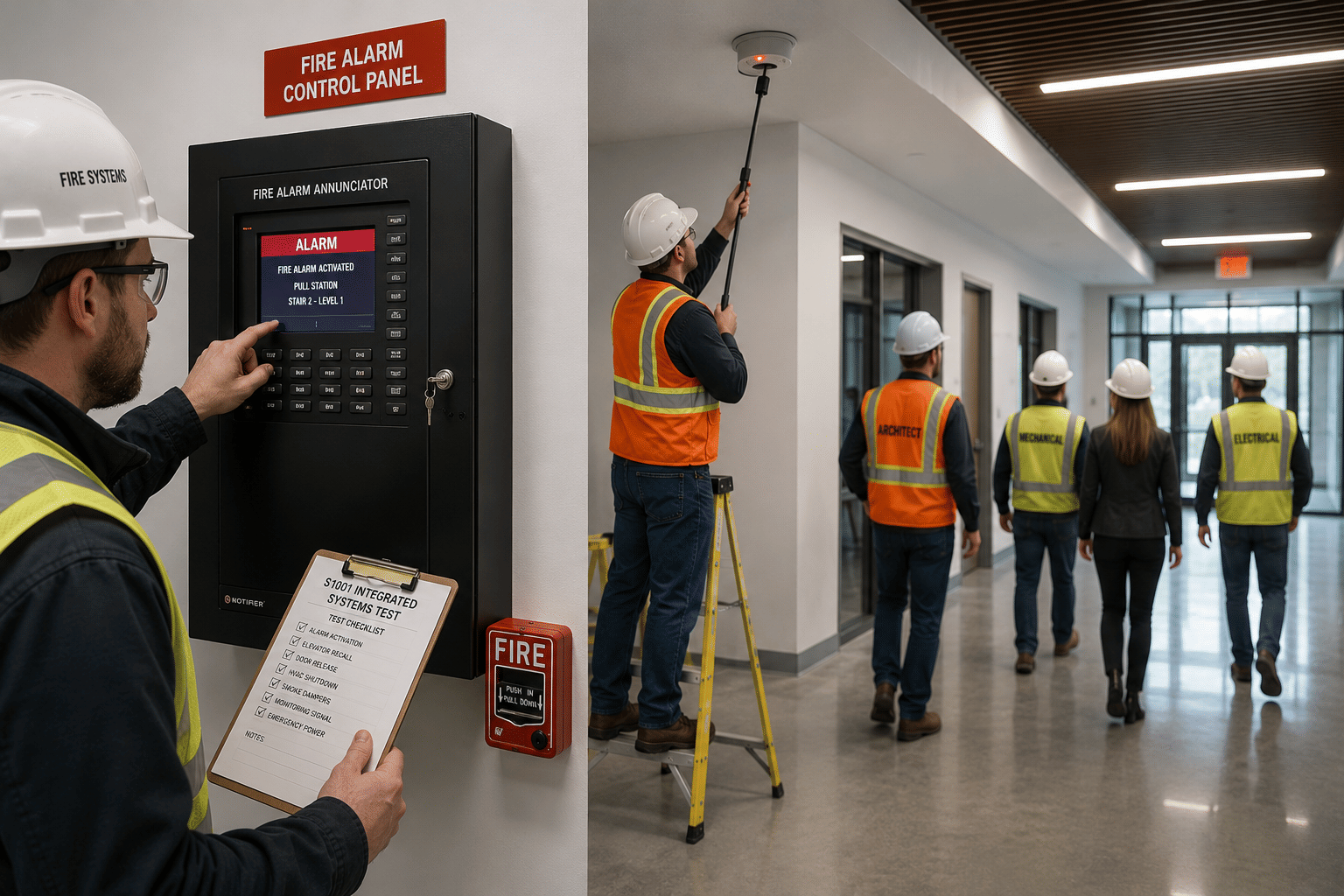
What S1001 Testing Day Actually Looks Like
Now comes the fun part.
Everyone is on site. The fire alarm technician is ready. The elevator technician is there. Mechanical and electrical are represented. The integrated testing coordinator has the test plan.
Someone activates a device.
The alarm starts screaming.
Congratulations. One thing works.
Now someone at the annunciator confirms what the system is reporting. If we are standing at Classroom 102 and the annunciator says Classroom 102, fantastic.
Move to another device.
We activate the pull station at Stair 2.
The annunciator says Classroom 105.
Well…shit.
Now we have something to fix.
At the same time, the rest of the team is watching everything associated with that sequence. Did the elevator recall correctly? Did the hold-open doors release? Did access-controlled doors respond? Did the mechanical systems react? Did the required dampers move? Did the monitoring station receive the signal?
Reset the systems and move to the next test.
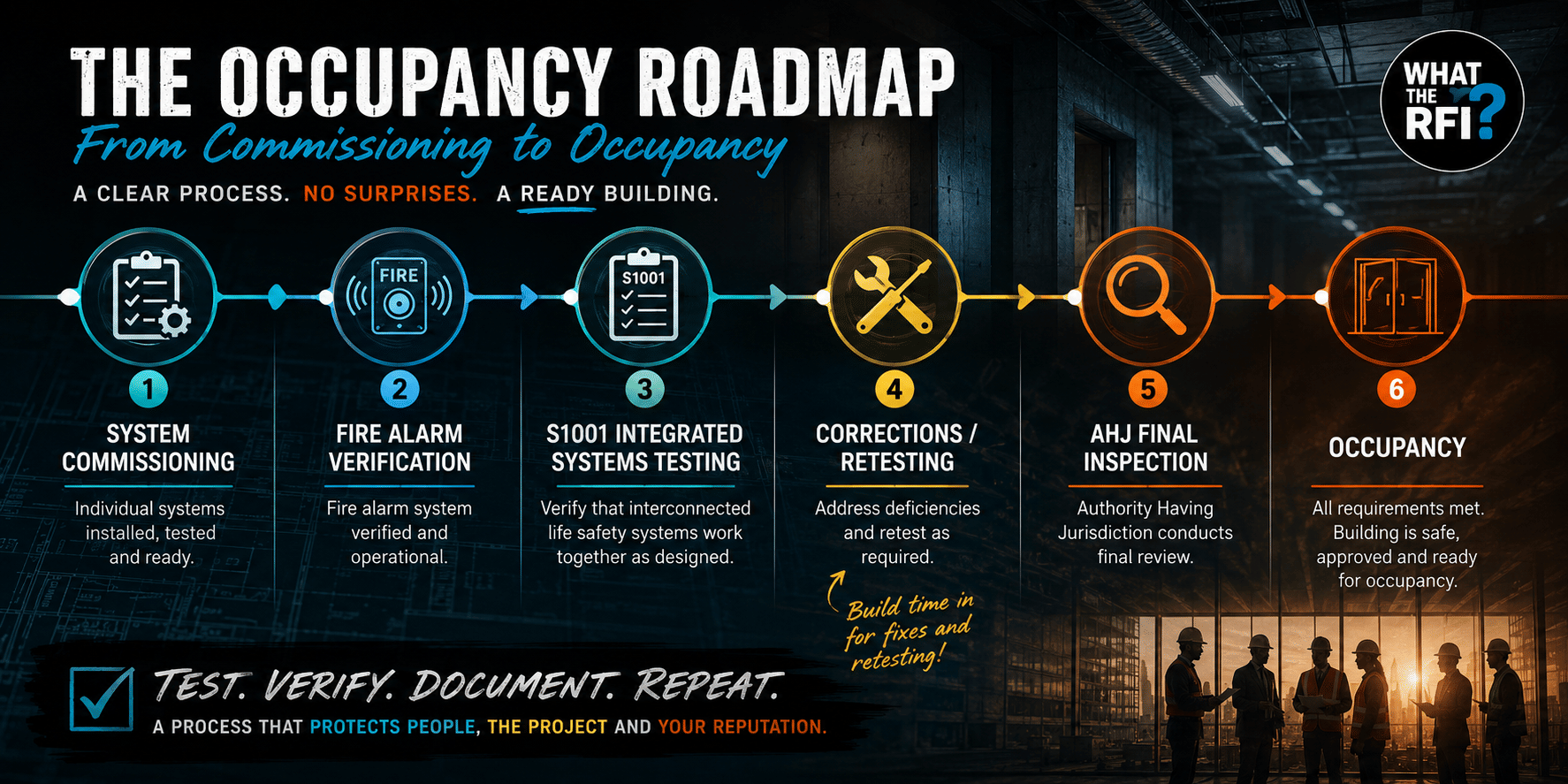
The exact procedure depends on the building, its systems and the testing plan, but from the CA perspective the workflow is pretty straightforward:
Initiate. Observe. Verify. Document. Reset. Repeat.
And listen to that fire alarm for hours.
Seriously. Bring earplugs.
Expect Failures—and Plan for Retesting
Something failing during integrated testing is not exactly good news, but it is also why you are testing.
A door may not release. An elevator may recall incorrectly. A damper may not move. An annunciator label may be wrong. Sometimes it is a programming issue that can be corrected immediately. Other problems take longer.
If something fails, document it clearly. Identify the affected system and location, determine who needs to correct it, and confirm whether retesting is required.
Do not rely on:
“Yeah, we’ll fix that.”
Life-safety systems are not the place for vague promises.
This also means your occupancy schedule needs breathing room. I would not recommend scheduling S1001 testing on Monday, the Fire Department Tuesday, Building Inspector Wednesday and expecting an occupancy permit Thursday.
That is not a schedule.
That is a prayer.
Construction is construction. Things fail. Programming needs adjustment. Components need replacement. Specialized technicians may need to return. Reports still need to be completed.
Leave time between integrated testing and the AHJ’s final occupancy review for corrections, retesting and documentation.
Retesting also costs money. The coordinator may need to return. Consultants and affected trades may have to come back. Elevator technicians and other specialists may need another site visit.
There is a very real financial benefit to getting the systems ready before formal testing begins.
What Architects and Construction Administrators Should Document
The integrated testing coordinator will produce the formal testing documentation required under their scope, but that does not mean the architect should stop taking notes.
Treat testing day almost like a focused field review.
Record what you observed. Note the system and location of deficiencies. Track consultant or contractor follow-up. Confirm corrections and required retesting. Keep the final integrated testing documentation with the rest of the occupancy records.
This is also where a basic CA testing kit comes in handy. Two-way radios, ear protection, drawings, a clipboard and your own checklist can make a long testing day much easier. Specialized testing equipment should, of course, be handled by the appropriately qualified personnel.
I’ve been on projects where the contractor had essentially demobilized and the AHJ suddenly wanted to check something during a walkthrough.
Everyone looks around.
“Does anybody have one?”
Nobody.
You only need that experience once before the testing bag starts looking like a pretty good idea.
Passing S1001 Does Not Mean You Have Occupancy
The alarm works.
The doors released.
The elevator recalled.
The dampers moved.
The monitoring station received the signal.
Fantastic.
After a few deficiencies, some frantic programming changes and probably one technician showing up late, you passed the S1001 integrated systems testing.
Are we ready for occupancy?
Not quite.
Integrated testing is an important milestone, but it is only one part of the occupancy process. The AHJ may still require project-specific documentation, professional assurances and final inspections. Deficiencies may remain. Requirements will vary by project and jurisdiction.
That is why occupancy planning needs to start long before the inspector arrives.
If your project is approaching this stage, start with Building Occupancy Preparation: What Architects Need Before the Occupancy Permit. It covers the documentation, consultant coordination and planning that should already be underway before S1001 testing.
You can also follow the complete What the RFI? Occupancy & Project Closeout video series as we work through occupancy preparation, integrated testing, the AHJ inspection and project closeout.
The paperwork gets you ready.
The integrated test proves the building responds.
Next comes the fun part:
The Authority Having Jurisdiction is coming.
And they are going to find something.
This article was inspired by Episode 49 of What the RFI?, part of the Occupancy & Project Closeout series. Listen to the episode or watch the full series for more practical Construction Administration lessons from the field.

Fan Mail: How to Get Into Construction Administration
How do you get into Construction Administration? In this special episode of What the RFI?, recorded while on vacation in Tofino, BC, I answer some fan mail from Richard—an experienced Architectural Technologist looking to make the jump into a full-time Construction Administration role. We talk about how experience in architectural technology, construction documents, RFIs, shop drawings and consultant coordination can become the foundation for a career in CA—and why you probably already know m...
Occupancy Inspections: What Building Inspectors Look For
Your building is nearly finished. The consultants have signed off. Integrated systems testing is complete. Everyone is talking about move-in day. Now the building inspector is coming. In Episode 50 of What the RFI?, we’re talking about one of the biggest milestones in Construction Administration: the occupancy inspection. What happens when the Authority Having Jurisdiction (AHJ) arrives on site? What is the building inspector actually looking for? Who should attend the inspection? And what ha...
CAN/ULC-S1001 Integrated Systems Testing — Getting Ready for Occupancy
What happens after the fire alarm goes off? Does the elevator recall? Do the doors release? Do the mechanical systems respond? Does the monitoring station receive the signal? In Episode 49 of What the RFI?, we continue our four-part Building Occupancy Series with a practical look at CAN/ULC-S1001 Integrated Systems Testing from the Construction Administrator’s perspective. We break down what S1001 testing is, how it differs from fire alarm verification, who needs to be involved, how to prepar...